I spent seven years running a juice and smoothie bar, about 400 smoothies a day, and then moved into product testing for commercial kitchen suppliers. That history means I have burned out more blender motors than most people will own in a lifetime. Frozen mango, kale stems, almond butter, ice by the bucket. My old business partner still calls the blender the only honest appliance in the kitchen, because it either pulls food down into the blade path or it doesn't. There is nowhere for a blender to hide.
That is the lens I bring to this comparison of budget blenders for smoothies. Watts are a starting point, not a verdict. Jar geometry, blade stack order, and whether the jar survives a dishwasher cycle are what decide whether you are still using the machine in year three or hiding it in a cabinet behind the rice cooker.
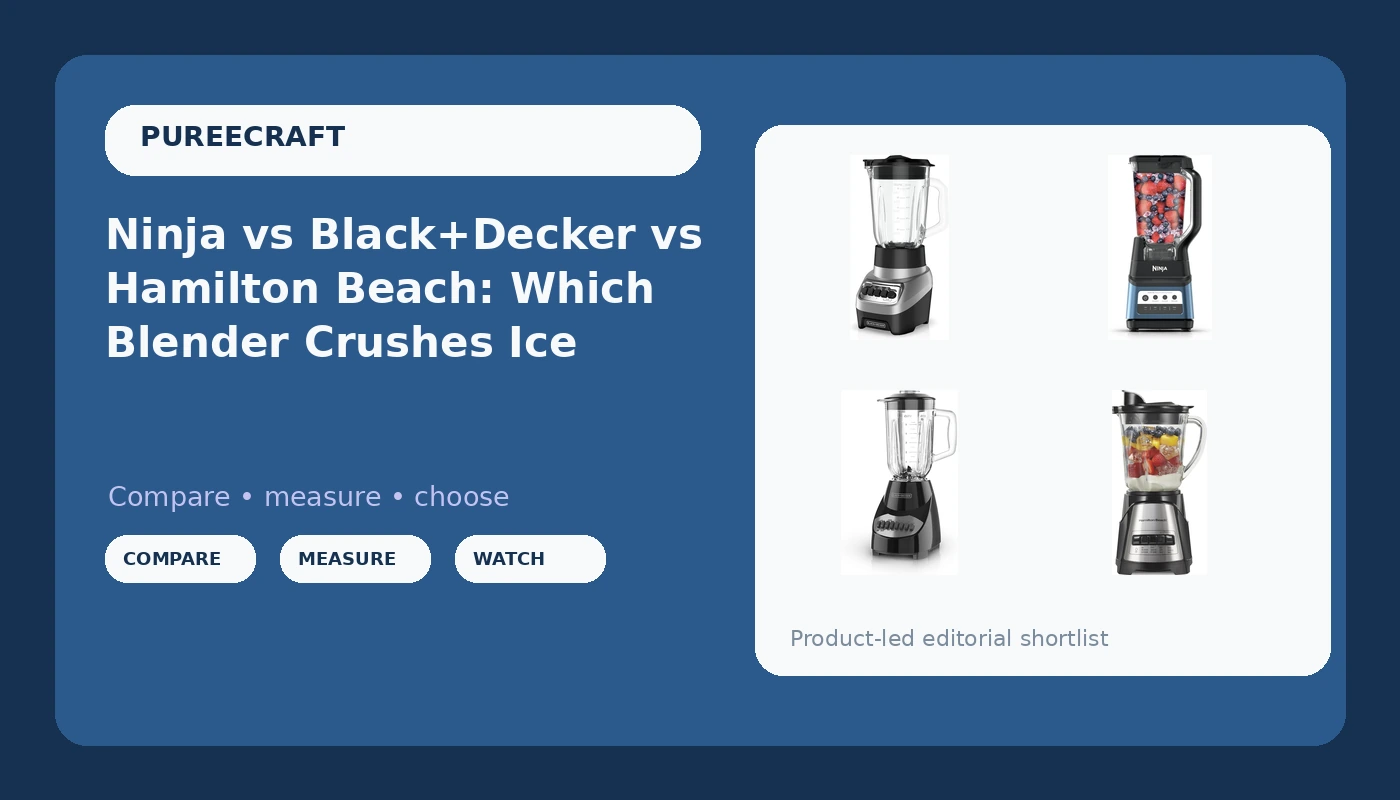
The Ninja Professional Plus is the machine I would hand to anyone blending frozen fruit more than three times a week, because 1,400 watts, Auto-iQ programs, and a 72-ounce pitcher give it headroom the other three cannot match. The two Black+Decker models and the Hamilton Beach Power Elite sit in the same entry tier, and the differences between them come down to jar material, speed count, and how the jar funnels food back down into the blades.
Here is the full comparison, with what each machine gets right and where it gives something up.
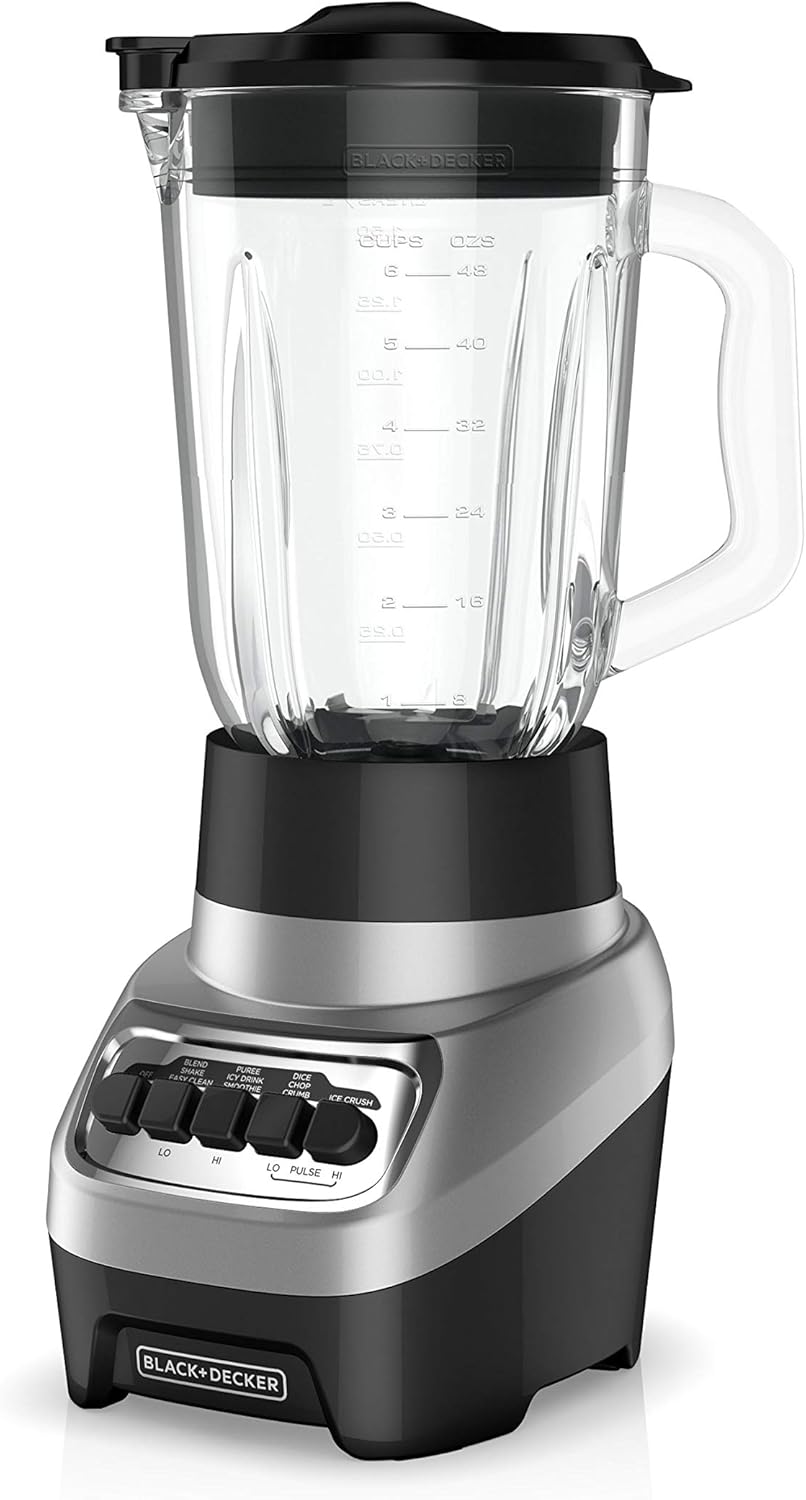
BLACK+DECKER PowerCrush Multi-Function Blender with 6-Cup Glass Jar, 4 Speed Settings, Silver
A 6-cup glass jar that goes straight into the dishwasher, four speeds with simple controls, and a footprint small enough to live on the counter
No programmed cycles, less speed granularity than the ten-speed Black+Decker, and a 6-cup jar means a family blends in two rounds
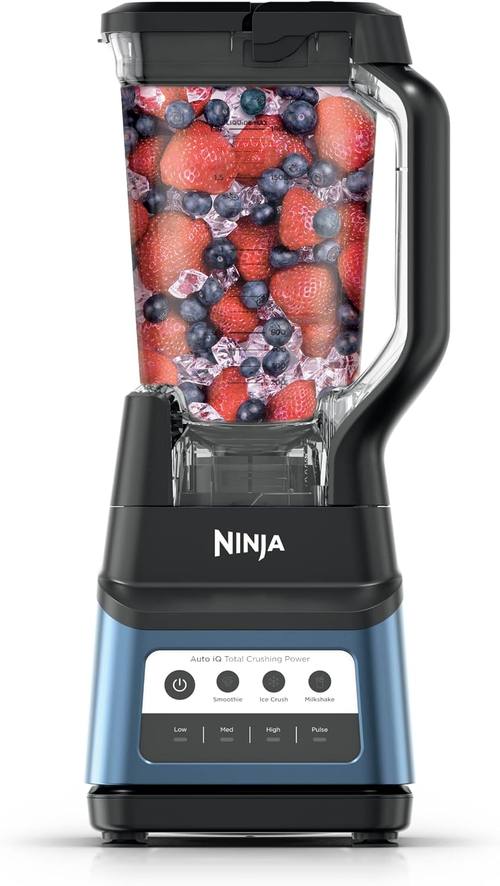
Ninja Professional Plus Blender, Auto-iQ, 1400W, 72oz Pitcher
The most headroom in the group: 1,400 watts, Auto-iQ programs that run the pulse-and-blend sequence for you, and a 72-ounce pitcher for batch work
Takes the most counter and cabinet space, the tallest jar here, and it sits at the top of this group on price
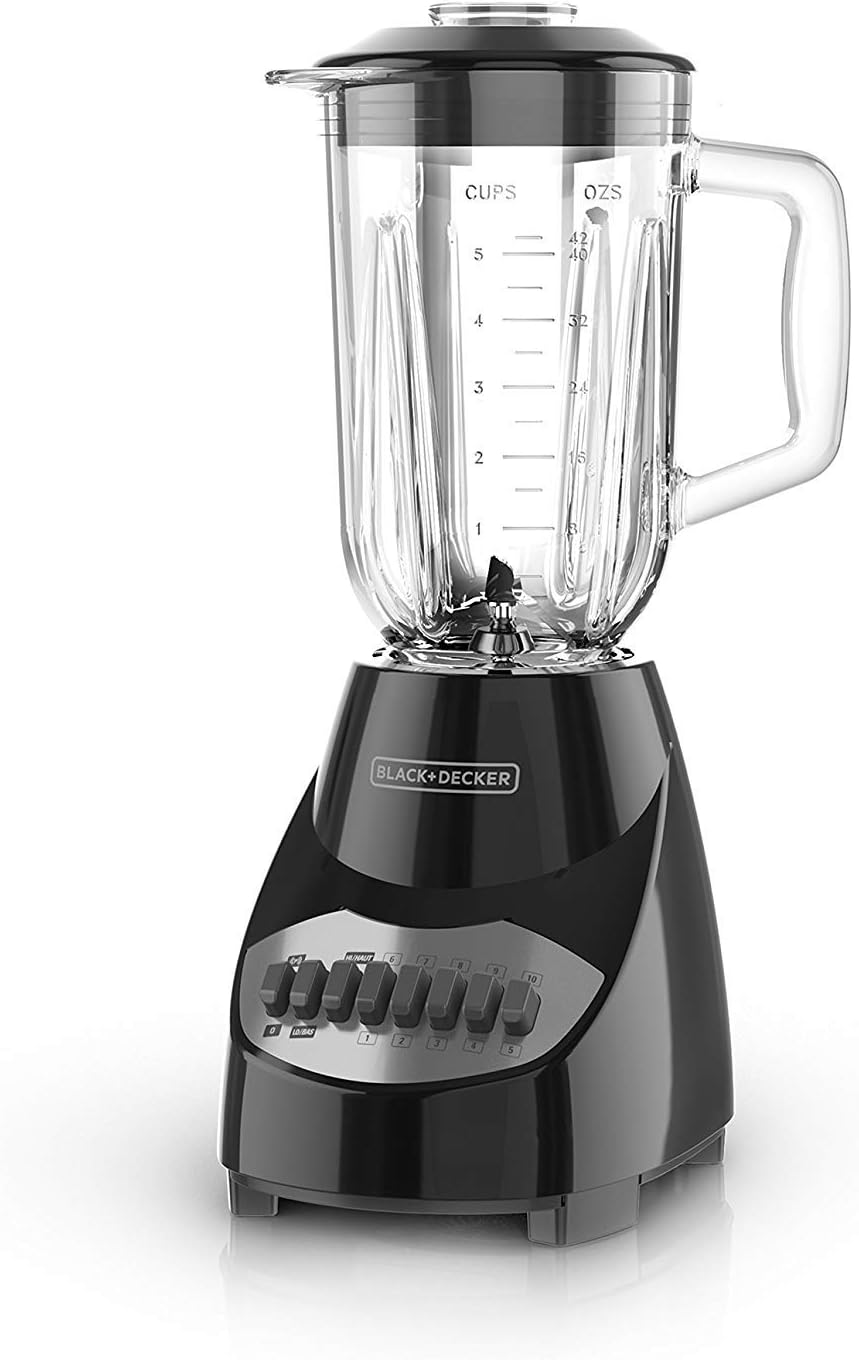
BLACK+DECKER Countertop Blender with 6-Cup Glass Jar, 10-Speed Settings, Black
Ten discrete speeds on a dial, the same 6-cup glass jar, and controls you can operate half awake
Ten speeds is finer control than most people will ever use, there are no preset programs, and the design is the most dated of the four
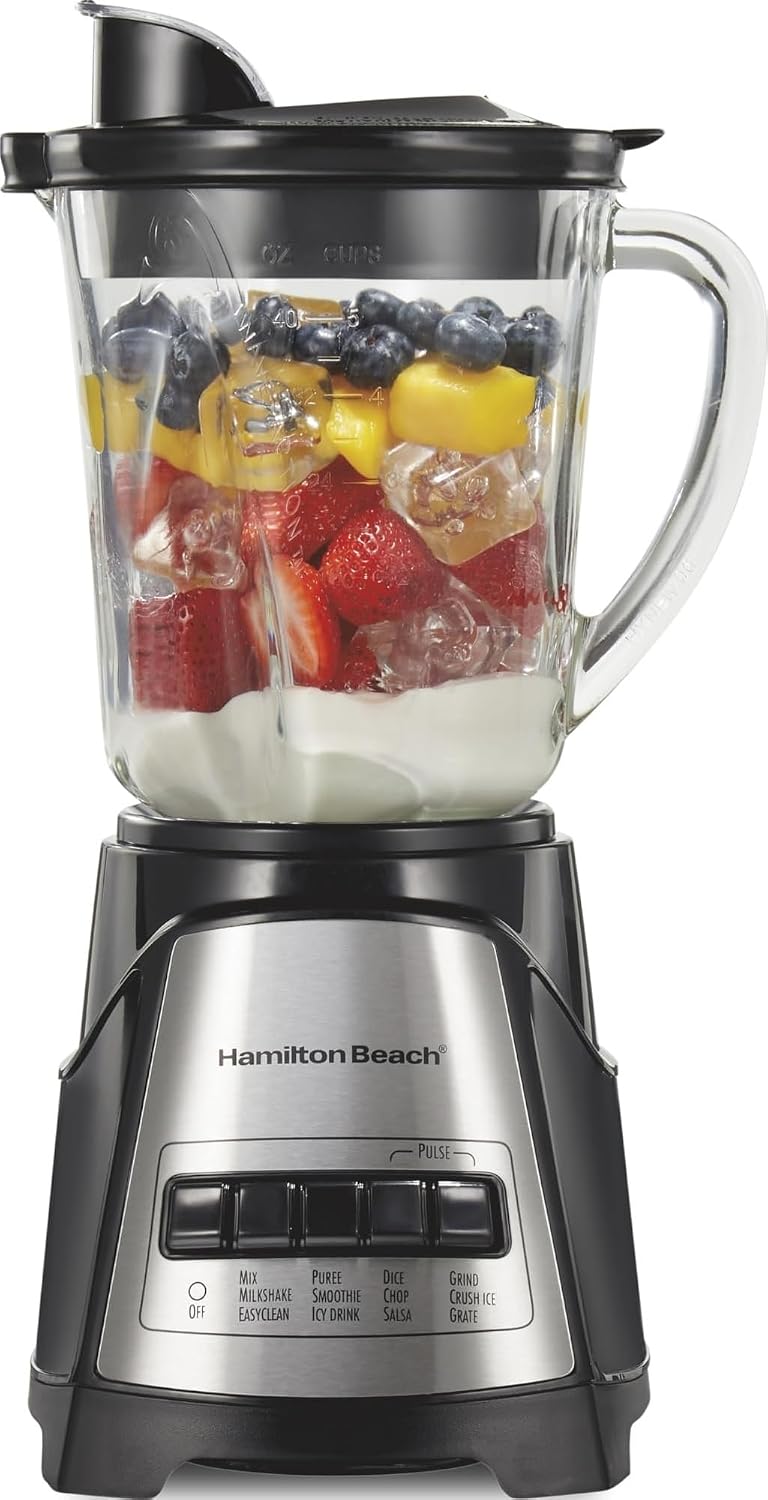
Hamilton Beach Power Elite Blender For Smoothies With Wave Action System
Wave Action geometry is designed to keep thick blends moving instead of piling up on the jar walls, and the controls are the simplest here
The thinnest spec record of the four, no glass jar listed, no speed count published, and the least headroom for big batches
Prices and availability were captured from Amazon Creators API and may change.
How I judge a blender before it earns counter space
Same four questions I used on the shop floor.
Ice. Does a handful of cubes come out as snow, or as shards that wreck the texture of a smoothie? If a machine cannot crush ice, it cannot make a proper smoothie. Full stop. That is not a preference, it is the baseline.
Pull. Watch a thick blend for twenty seconds. Does the jar funnel the mixture back down into the blades, or does everything heap up on the walls while the motor spins at nothing? This is where cheap machines expose themselves, and it has nothing to do with the number on the box.
Walk. Does the base stay planted when you push it, or does it creep toward the edge of the counter and rattle the drawer handles underneath?
Clean. Can the jar and lid go into the dishwasher without the base seal cracking? A blender you are scared to wash is a blender you will stop using, and the fastest way to kill a smoothie habit is to make cleanup a chore.
Notice that none of those four questions is a wattage number. Wattage tells you what the motor can draw from the outlet. It says nothing about whether the jar is shaped to use that power.
What the specs tell you and what they hide
Three things on a blender listing actually matter in daily use: jar material, speed count, and whether the machine has programs.
Jar material. Glass is heavier, but it does not scratch, does not go cloudy after a year of frozen blueberries, and does not hang onto last night's curry. Both Black+Decker machines here list a 6-cup glass jar. The Ninja and the Hamilton Beach listings do not name glass.
Speed count. You are comparing ten speeds, four speeds, and a set of one-touch programs. In practice most people use three settings: low for wet ingredients, high for frozen fruit, and short bursts for chopping. A ten-speed dial gives you fine control over how fast you ramp up as a blend thickens. A four-speed machine gives you fewer decisions. Neither is automatically better, but the dial is more useful than it sounds when you are blending something thick like almond butter.
Programs. Auto-iQ on the Ninja is the one real departure in this group. It runs a timed sequence of pulses and steady blending, so you press a button and step away instead of standing there pulsing by hand. On a weekday morning that is worth something real.
Ninja Professional Plus: the most headroom in this group
1,400 watts is the highest figure here, and 72 ounces is the largest pitcher. But the number that actually matters is the pitcher size, because it decides how many rounds you blend before breakfast is done. A 72-ounce jar handles a full family batch in one pass. That is the difference between a blender you use daily and one you use when you feel ambitious.
The Auto-iQ programs pair with that pitcher size well. Frozen fruit and ice in a full jar is exactly the situation where you want a machine to pulse, rest, and blend on its own schedule rather than your hand on a button.
The trade-offs are physical. A big pitcher means a tall jar, so measure your cabinet clearance before you order. It also takes the most counter space of the four, and it sits at the top of this group on price. If you blend one small smoothie at a time, you are paying for capacity you will not use.
Black+Decker PowerCrush: the compact glass-jar option
Four speed settings and a 6-cup glass jar in a silver finish that is compact enough to leave out. The glass jar is the headline for me. It goes in the dishwasher, it does not hold onto smells, and it does not scratch the way plastic does once you start blending frozen fruit and greens every morning.
The PowerCrush is positioned as a multi-function machine, which in this class usually means the jar and blade setup is meant to handle more than smoothies. What the listed specs give you is the jar size and the four speeds, and both are honest for the tier.
What you give up is granularity. Four speeds versus the ten-speed Black+Decker means less fine control when you want to ease into a thick blend, and there are no preset programs, so you are pulsing by hand. The 6-cup jar is a two-person size. A family of four blends twice, which is a minor annoyance rather than a dealbreaker.
If counter space is tight and you refuse to blend in plastic, this is the one in this group to look at.
Black+Decker BL2010BG: ten speeds behind a glass jar
Ten speed settings, a 6-cup glass jar, and a black housing. The dial is the reason to consider this over the PowerCrush. Ten speeds sounds like spec-sheet padding until you are ramping up slowly on a jar full of frozen mango, and then the extra steps are genuinely useful.
For someone who wants to nudge the speed up gradually as a blend thickens, or who likes the control of dropping to the lowest setting for wet ingredients before adding ice, this is the most adjustable machine in the budget tier of this group.
What you give up: no programs, and the styling is the most dated of the four. Ten speeds is also more settings than most households will ever touch, and if you know you will only ever press low, high, and pulse, you are paying for a dial you will not use. The glass jar is the same story as the PowerCrush: dishwasher friendly, no lingering smells, no scratching.
Hamilton Beach Power Elite: built around the smoothie
The Wave Action system is a jar geometry claim, and jar geometry is the part of a blender that actually decides whether a thick blend works. The idea is that the jar shape keeps ingredients folding back into the blade path instead of letting them sit against the walls. In a machine at this tier, that design intent matters more than any wattage badge on the front.
The record here is also the thinnest of the four. The machine is positioned for smoothies, no glass jar is listed, and no speed count is published, so you are buying on faith in the design rather than on a spec comparison. If you want to know exactly what you are getting down to jar material and speed steps, the two Black+Decker listings tell you more.
Where it earns its place: it is the most straightforward machine here to operate, which matters if the blender is going to be used by a teenager, a roommate, or anyone who does not want to think about settings before coffee. Simple has value.
Ice, frozen fruit, and the thick-blend problem
Every one of these machines will make a thin smoothie with a banana and some yogurt. The test that separates them is what happens when you add a cup of frozen mango, a handful of kale, a scoop of almond butter, and ice in the same jar.
Three habits make any of these blenders work better:
Liquid first, always. Put the liquid in before the frozen fruit and the greens. The blades need something to pull down, and a dry jar of frozen fruit just spins.
Pulse before you commit. Short bursts knock the pile down without heating the ingredients. On the two machines with no programs, pulse is the feature you will use constantly.
Do not overfill. A jar loaded past its line will stall anything in this tier. If you bought a 6-cup machine and you keep hitting the top of the jar, that is a signal you needed the bigger pitcher, not a stronger motor.
The tamper is the tool that solves thick blends on commercial machines, and it is the accessory I miss most on home units. Without one, your options are pulse, scrape, and add liquid, in that order.
What I would buy, and for whom
Buy the Ninja Professional Plus if you blend frozen fruit or ice more than three times a week, if you are making smoothies for a household rather than one person, or if you want programs so you can walk away mid-blend.
Buy the Black+Decker PowerCrush if you want a glass jar, a small footprint, and you are blending for one or two people. It is the easiest of the four to live with on a crowded counter.
Buy the Black+Decker BL2010BG if you want the most speed control in the budget tier and you like a dial. The ten speeds are the reason to pick it over the PowerCrush.
Buy the Hamilton Beach Power Elite if you want the simplest possible smoothie machine and you are happy to trust jar design over published specs.
The through-line across all four is the same one I learned on a 400-smoothie day: the jar does the work, the motor just supplies the muscle. Pick the jar that matches how many people you blend for, confirm it fits under your cabinets, and make sure it is easy enough to clean that you will actually keep using it.