I ran a juice and smoothie bar in San Diego for seven years. Four hundred smoothies a day, frozen mango by the case, kale stems, almond butter, ice by the bucket, and a row of blenders that either held up or died in front of paying customers. Since then I have tested equipment for commercial kitchen suppliers, and my standards did not soften when I started working in ordinary home kitchens. This countertop blender comparison covers four machines that people genuinely buy: two full-size blenders, one value blender, and one food processor that keeps landing in the same search results because it chops vegetables in seconds.
None of these four is a commercial unit, and none of them pretends to be. What separates them is not the number on the box. It is jar geometry, motor headroom, blade path, and whether you are willing to wash the thing every single day. If a machine fails that last test, it ends up in a cabinet by March.
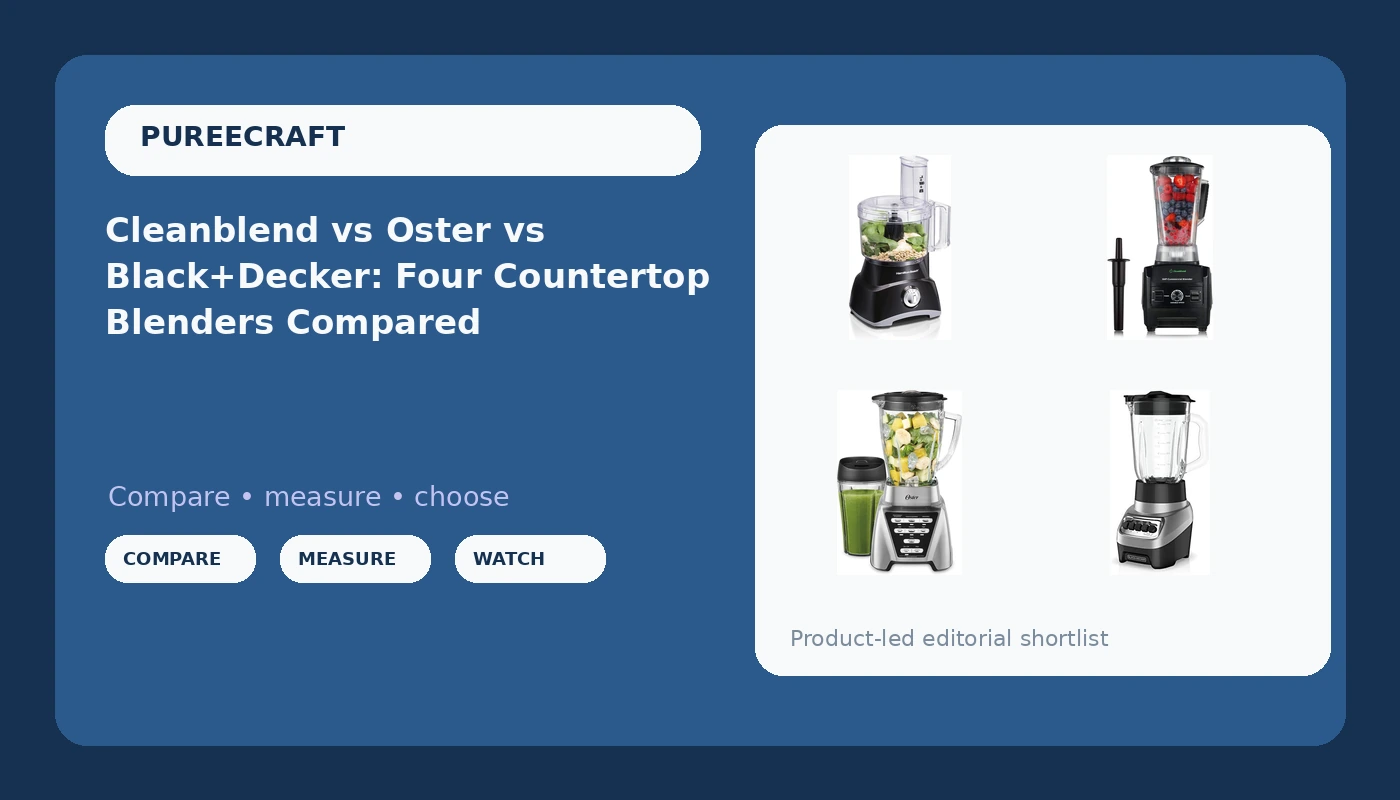
The machine that comes closest to a commercial promise in this group is the Cleanblend, because 1800 watts, a 3HP motor, a 64oz jar, stainless steel blades, and a 5-year full warranty are the specs I associate with a workhorse. The Oster Pro 1200 is the smarter everyday balance of power, glass, and a to-go cup. The Black+Decker PowerCrush is the light-duty blender for the price of a night out. The Hamilton Beach 8 Cup is not a blender at all, and buying it for smoothies is the most common mistake in this category.
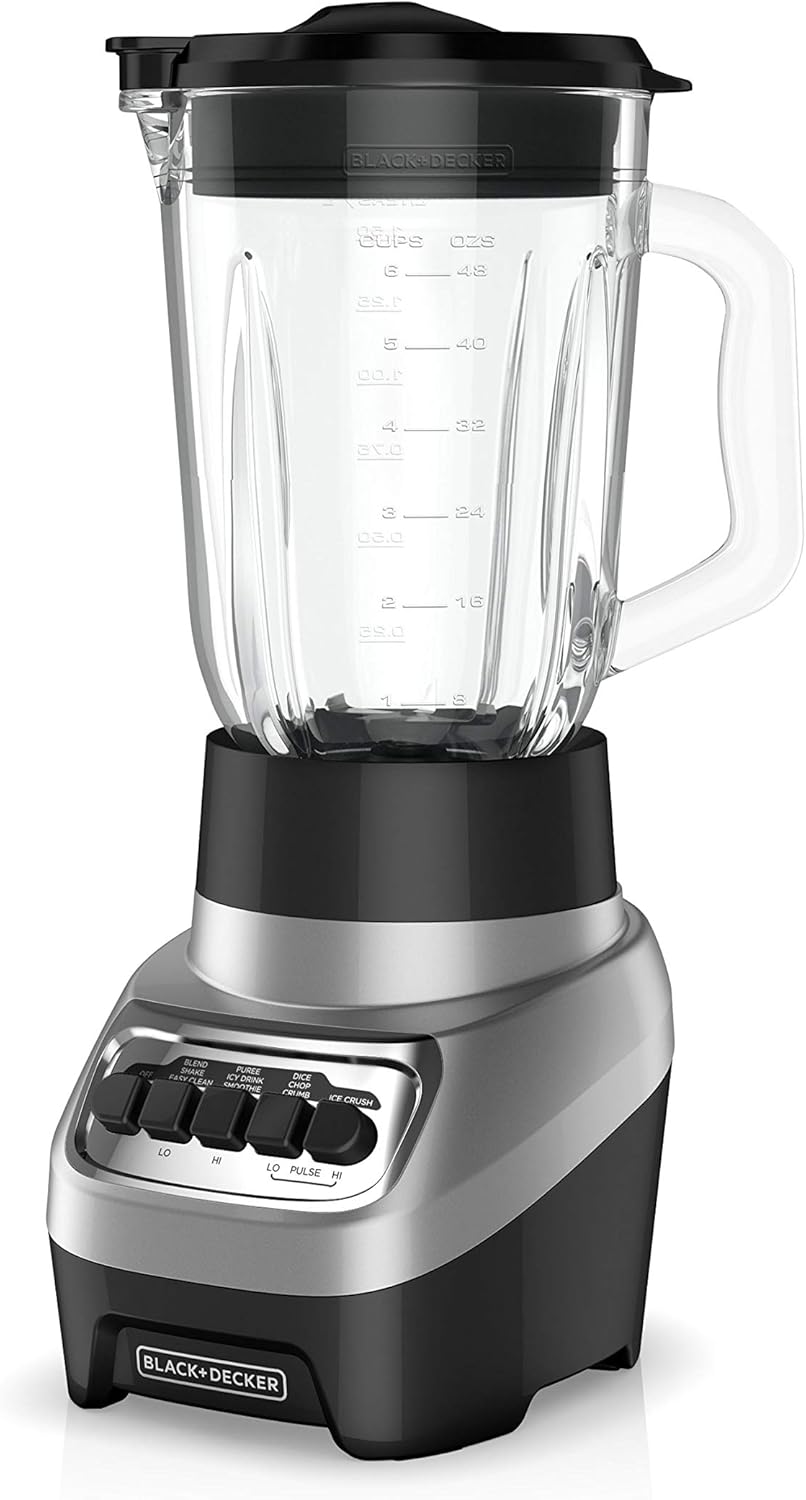
BLACK+DECKER PowerCrush Multi-Function Blender with 6-Cup Glass Jar
A 6-cup glass jar, 4 speed settings, and a footprint small enough for a rental kitchen. The easiest of the four to live with daily.
The least motor headroom here. Soft fruit and batter, yes; frozen blocks and nut butter, no.
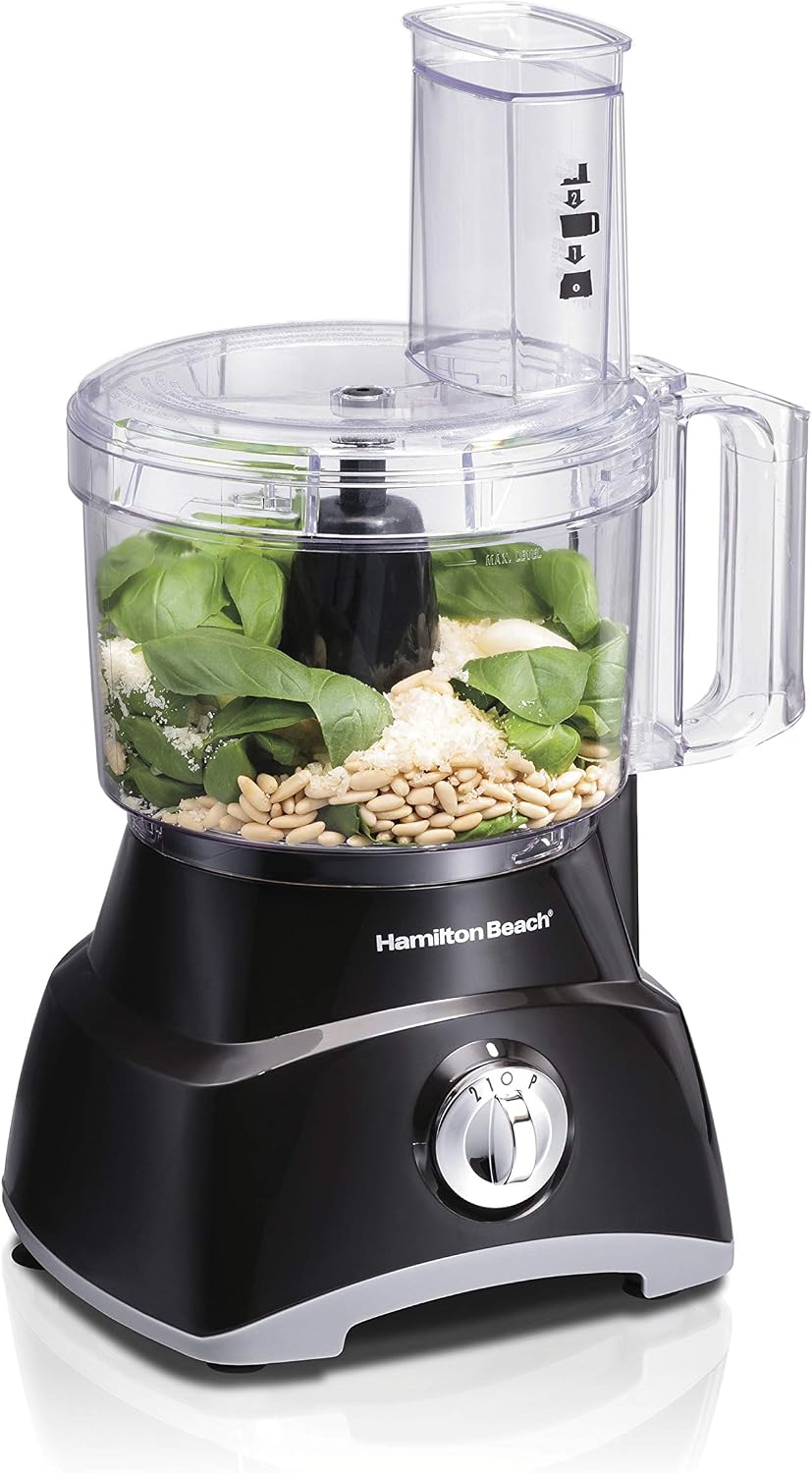
Hamilton Beach 8 Cup Food Processor & Vegetable Chopper
The only machine in this group built around a chopping disc and a feed chute. Salsa, slaw, and pie dough in one pass.
It is a chopper, not a blender. Thick purees and crushed ice are not what this machine is for.

Cleanblend Commercial Blender with 5-Year Full Warranty
1800W, 3HP, a 64oz jar, stainless steel blades, and a 5-year full warranty. The commercial template, scaled for a home counter.
The largest footprint and the biggest spend. Genuine overkill if you blend twice a week.
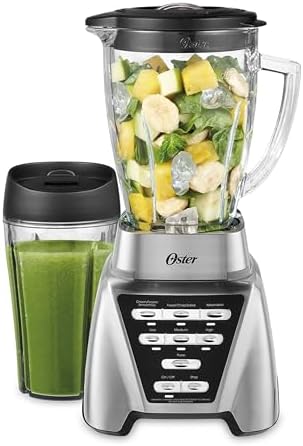
Oster Pro 1200 Smoothie Blender with Glass Jar & 24oz To-Go Cup
1200W, 7 speeds, a glass jar, and a 24oz to-go cup. The best middle ground between power and cleanability.
1200 watts is not 1800 watts once frozen fruit is stacked above the blades. The to-go cup is a compromise, not a bonus.
Prices and availability were captured from Amazon Creators API and may change.
Watts are a starting point, not a verdict
Every one of these machines has its wattage printed somewhere prominent, because wattage sells. I care about it for exactly one reason: headroom. A blender does its hardest work in the first three seconds of a blend, when the blade path is buried in frozen fruit and the motor either pulls the load or stalls. Extra watts buy you tolerance for a bad loading order, a full jar, and a user who does not want to think about technique.
Headroom is not the same as performance, though. A 1800W motor driving a jar that cannot pull food down into the blade path is a loud appliance, not a good blender. That is why I rank the Cleanblend first here on power and the Oster second, and why I would take a well designed 1200W jar over a poorly designed 1500W jar every time. Watts tell you what a motor can survive. Blade geometry and jar shape tell you whether the blend actually happens.
There is a second reason headroom matters, and it has nothing to do with smoothies. Cheap motors die from repeated stalls. Every time a motor bogs down on frozen fruit, it heats up. Do that five days a week for a year and you have a burned-out machine, which is exactly how the last three budget blenders I owned met their end.
Jar geometry and jar material
Jar geometry is how the shape of the container funnels ingredients toward the blades. Narrow at the bottom and wide at the top, food falls in on itself and gets recirculated. Wide and flat, and you end up plunging a spatula into a spinning vortex of frozen fruit, which is how people break spatulas and lose fingertips.
This is where the Cleanblend's 64oz jar earns its place. Big jars are usually a liability on a home counter, but a large jar with a proper blade path is what lets you blend a full batch of soup or a family-sized smoothie without stopping to scrape down the sides twice.
Material matters just as much. Glass jars scratch less, hold no ghost flavors from last night's garlic sauce, and do not cloud over after a hundred batches. The PowerCrush runs a 6-cup glass jar and the Oster runs a glass jar with an added 24oz to-go cup, and that is a real advantage over plastic on both counts. Glass is heavier, and if you drop it, it breaks into a hundred pieces. I have done that. I still buy glass.
The Cleanblend, for people who blend every day
If your blender is the most-used appliance in your kitchen, this is where the money goes. The 1800W motor, the 3HP rating, the 64oz jar, and the stainless steel blades are all pointing at the same job: long blends with hard ingredients, without the machine overheating or the blade dulling.
The warranty is the part I would underline. A 5-year full warranty on a machine in this class tells you the manufacturer expects the motor to survive normal use for five years. That is the closest thing to a commercial promise in this comparison, and it is the reason I would hand this machine to someone who makes a smoothie every morning and nut butter on weekends.
What you give up is counter space and money. This is the biggest and most expensive machine of the four, and it is honestly more blender than most households need. If you blend twice a week and never touch frozen fruit, you are paying for headroom you will not use.
The Oster Pro 1200, the everyday compromise that works
The Oster Pro 1200 is the machine I would put in most kitchens. 1200W, 7 speeds, a glass jar, and a 24oz to-go cup covers the two things people actually do: blend a jar of smoothie and blend a single serving before work. Seven speeds sound like marketing until you use them, because the low end is what you need for salsa and the high end is what you need for frozen fruit.
The to-go cup deserves an honest note. I have made fun of single-serve cups for years and I own three of them. They are convenient, they are also the graveyard of good intentions, because nobody blends one smoothie forever. Treat the cup as a bonus, not the reason to buy, and you will be happy with it.
The trade-off is power. 1200W will handle frozen fruit if you load the jar properly, meaning liquid first, then soft ingredients, then frozen on top. If you dump a brick of frozen mango on top of dry spinach and hit the highest speed, you will stall this motor, and you will eventually damage it. That is a technique tax the Cleanblend does not charge you.
The Black+Decker PowerCrush, for light duty done well
The PowerCrush is the smallest commitment here. A 6-cup glass jar and 4 speed settings is a simple machine, and simple is not an insult. It makes pancake batter, it blends soft fruit, it purees a soup, and it fits in a cabinet above the fridge. For a small kitchen, a single person, or a household that blends occasionally, that is genuinely enough.
The 4 speeds do the same job as 7 speeds in practice, because most people use two of them: low and high, with the occasional pulse. What you do not get is motor headroom. This is not the machine for frozen fruit stacked to the top of the jar, and it is not the machine for almond butter. Buy it for the job it is built for and it will serve you for years. Buy it expecting commercial performance and you will be disappointed inside a month.
The Hamilton Beach 8 Cup Food Processor, a different tool
The reason this machine appears in blender searches is that it chops vegetables faster than any blender can. A feed chute and a chopping disc turn an onion, a carrot, and a bell pepper into diced salsa base in the time it takes a blender to wake up. Eight cups is a useful working capacity, and the "vegetable chopper" half of the name is doing real work.
But it is not a blender, and no amount of marketing changes that. It will not crush ice into snow, it will not make a silky green smoothie, and it will not turn frozen mango into a thick puree. If you buy it for smoothies because it was cheaper than the blender you actually wanted, it will sit in the cabinet and you will be back here in six months.
The right way to own it is as a partner to a blender, not a replacement. If you cook a lot and you already own a decent blending machine, this is the upgrade that actually saves you time on weeknights.
The trade-offs, stated plainly
Every machine here gives up something, and the honest version of this comparison is that your choice depends on which loss you can live with.
The Cleanblend gives up price and counter space. You get watts, jar volume, and a 5-year full warranty in exchange.
The Oster Pro 1200 gives up peak motor headroom. You get a glass jar, 7 speeds, a to-go cup, and a machine that handles 90% of home blending tasks without drama.
The PowerCrush gives up power. You get a small glass jar, a small footprint, and a blender that is easy to clean and easy to store.
The Hamilton Beach 8 Cup gives up blending entirely. You get the best chopping and slicing tool in this group, and you should only buy it if that is what you need.
How I would choose in five minutes
Blend frozen fruit, ice, or nut butter more than three times a week, or want one machine to outlast the rest: the Cleanblend.
Blend smoothies most mornings, want a glass jar, and want to spend meaningfully less: the Oster Pro 1200.
Blend soft ingredients a couple of times a month and counter space is tight: the Black+Decker PowerCrush.
Chop vegetables, make salsa, and shred cheese constantly, and already own a blender: the Hamilton Beach 8 Cup.
If you are deciding between a blender and a chopper and you can only buy one, buy the blender. A blender can make a rough chop of soft vegetables in a pinch. A food processor cannot make a smoothie, and no technique gets you around that.
What I am watching next
The 2026 crop of home blenders is quietly splitting into two camps: high-wattage machines built on commercial geometry, and inexpensive jars with enormous wattage claims and no blade path to match. The Cleanblend sits firmly in the first camp. The other three are honest about what they are, which I respect more than a spec sheet that promises everything.
The thing I will keep checking is the same thing I checked in my shop: whether a machine survives a bad week. Frozen fruit, a full jar, a user in a hurry, and a sink full of dishes afterward. That is the only test that has ever mattered.