I've burned out more blender motors in one summer than most people will own in a lifetime. I ran a juice and smoothie bar for seven years, four hundred smoothies a day at our peak, and I'm still here, still blending, still keeping score.
The Vitamix 5200 is advertised as the professional-grade gold standard, the machine that will outlive your kitchen renovation.
But is it really worth five times the price of a Ninja? I've lived with both for years, and here's the truth: it depends entirely on what you're making, and the answer surprised me.
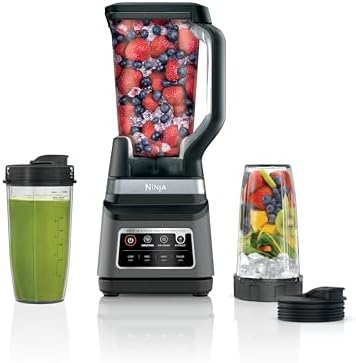
Ninja BN751 Professional Plus DUO
1400 peak watts, two pitcher sizes, Auto-IQ programs that actually work
Visit on Amazon →
Vitamix 5200 Professional-Grade Blender, 64 oz. Container, Black
Experience the legacy of Vitamix 5200, the professional-quality blender for family meals and entertaining. With a 2-horsepower motor, Vitamix 5200 effortlessly breaks down everything from fibrous gree
Visit on Amazon →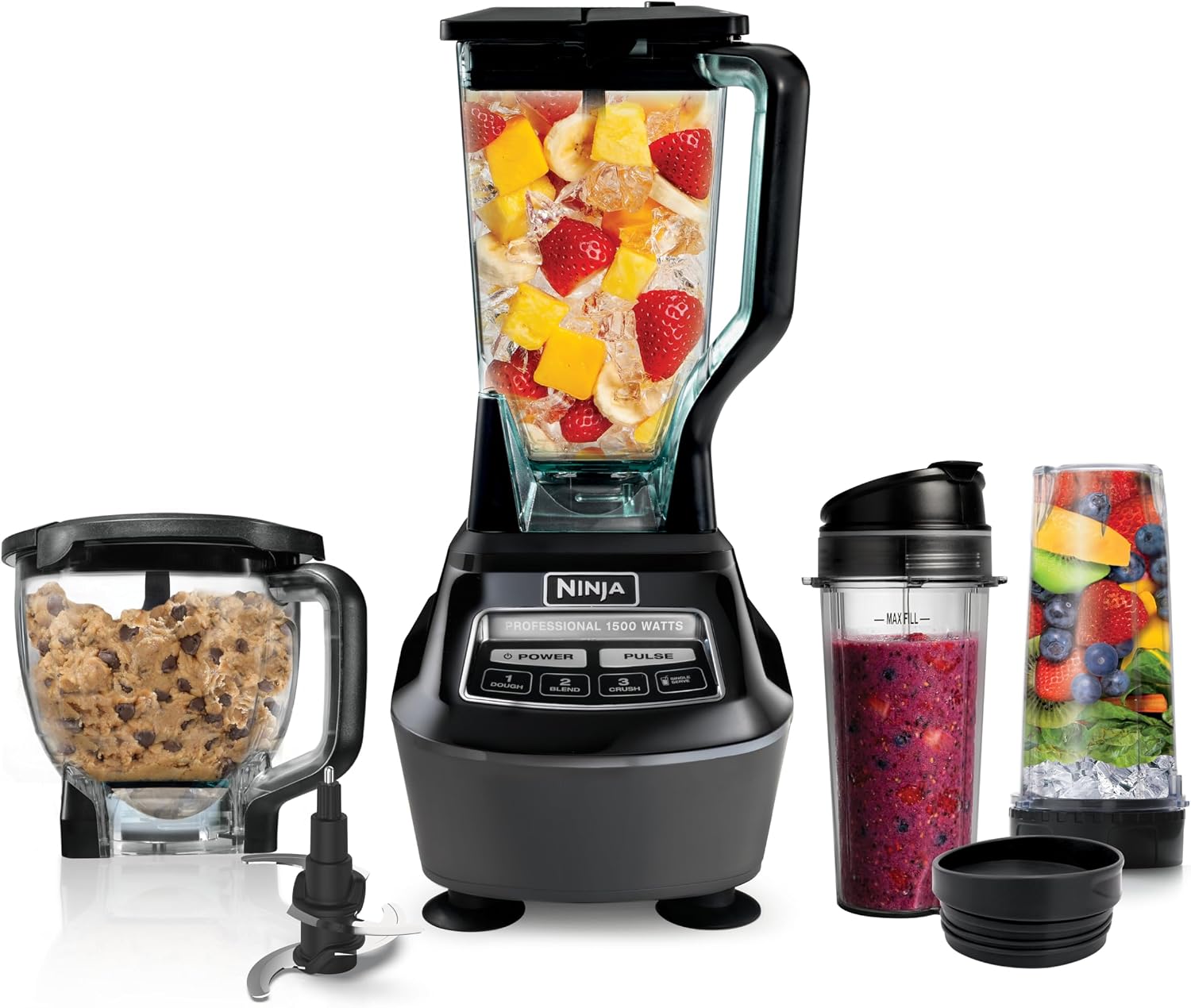
Ninja Mega Kitchen System, 1500W, 72oz Pitcher, 8-Cup, Black, BL770
The Ninja mega kitchen system comes packed with 1500 watts of power to handle all of your drink and meal making needs. The XL 72 oz. blender pitcher features total crushing technology to blast through
Visit on Amazon →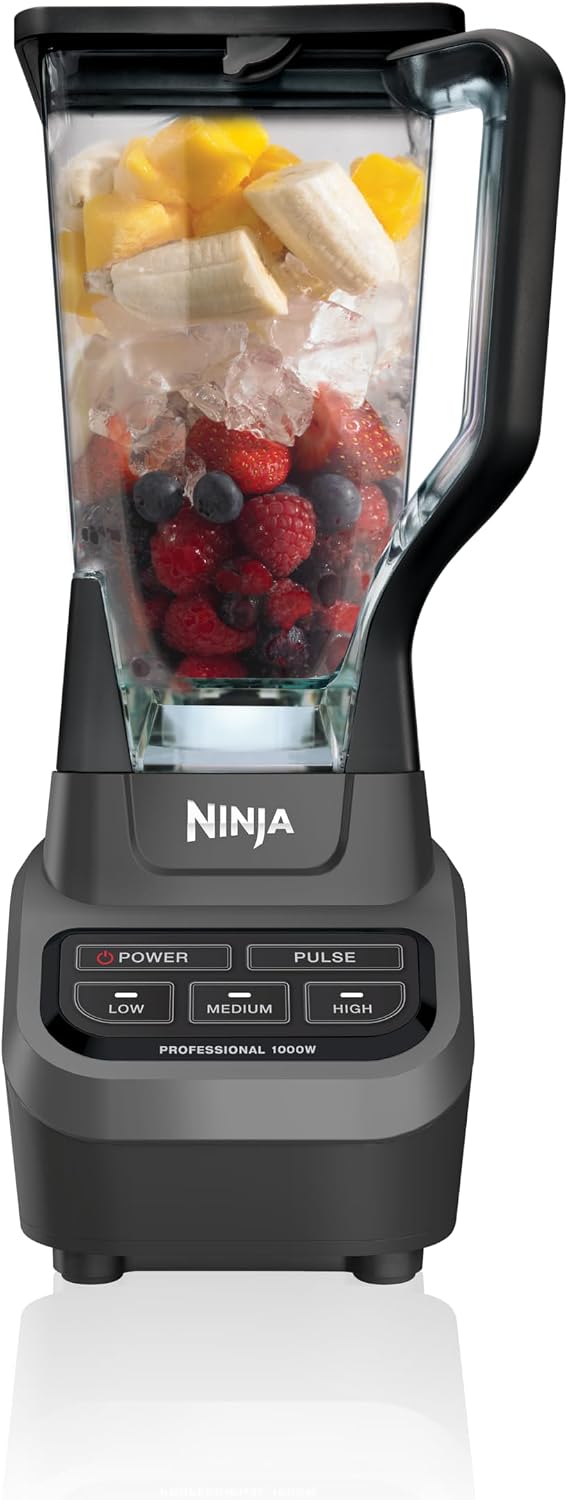
Ninja Professional Blender, 1000W, Total Crushing Tech, 72oz Pitcher, BL610
The sweet spot for family batches; simple and tough
Visit on Amazon →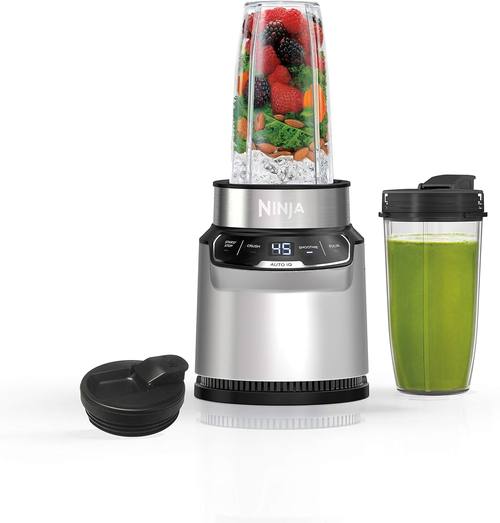
Ninja BN401 Nutri-Blender Pro
Two 24oz cups, Auto-iQ, compact footprint
Visit on Amazon →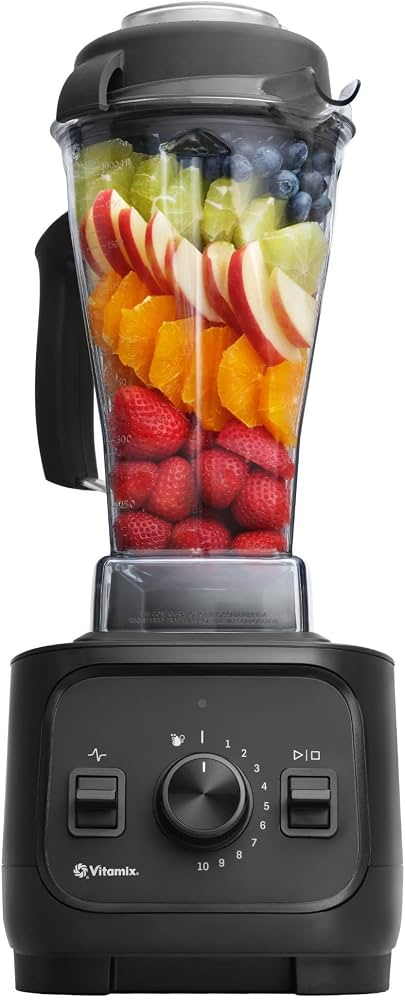
Vitamix VX1 Professional-Grade Blender, 64 oz. Container, Black
Newer pro-grade design with a quiet 1,400-watt motor, variable speed, and self-cleaning for smoothies, soups, and more.
Visit on Amazon →How I test
My dog Otis, a 65-pound lab who's convinced every blender is a food dispenser, supervises every test. He's knocked a pitcher off the counter twice, so I test lids hard. I run fifty smoothies per machine, including the workshift gauntlet: frozen mango, kale stems, almond butter, bucket ice. If a blender survives that, it's earned its place. If it doesn't, I tell you exactly where it died.
The Vitamix 5200
Let's start with the expensive one because that's what everyone asks about. The Vitamix 5200 is the machine I borrowed from a friend who swore I'd convert. After three weeks, I gave it back. It's not that it's bad. It's that it's not five times better than a ~$100 Ninja.
Here's what the Vitamix does that nothing else I've tested can match: it turns a handful of kale, half a frozen banana, and a cup of almond milk into something with the texture of heavy cream. No pieces.
No stranding. The 64-ounce pitcher has a narrow profile that pulls everything down into those stainless blades, and the 2-peak-horsepower motor never stalls.
I made smoothie bowls in it that were so thick I ate them with a spoon and never had to stop to scrape the sides.
That's real.
But here's what nobody tells you about the Vitamix: it weighs 10 pounds, it's loud enough to wake Otis from a dead sleep across the house, and there are no presets. You become the program. You stand there with the variable speed dial, ramping up slowly, feeling for the sweet spot.
I've done this long enough that I don't mind it, but my neighbor who bought one after I recommended it texted me after a week: "I just want to push a button and walk away." That's a fair complaint.
The price is the real issue. At roughly ~$500, the 5200 costs about 68 cents per day over two years of daily use. The Ninja BN751, at ~$140, costs 19 cents per day. The Vitamix does blend more smoothly, I'll give it that. But my old shop ran Ninjas for three years straight, and they never died. They just needed the lid replaced once.
I'll say this for Vitamix: the 7-year warranty is real, and the motor is built like a tank. If you're blending for a crowd every single day, or if you have health issues that require perfectly smooth textures, this machine earns its keep. For everyone else, you're paying for a level of refinement you won't notice in a morning smoothie.
The Ninja BN751 Professional Plus DUO
This is the machine I actually own now. I bought it after my second Ninja died, and it's been on my counter for 14 months. It's the one I reach for at 5:30am when I want a smoothie before Otis decides it's breakfast time.
The BN751 is the DUO, which means it comes with two pitchers: a 72-ounce one for family batches and a 24-ounce single-serve cup with a travel lid. That single-serve cup is the reason I bought it, because the single biggest lie in blending is that most machines handle small portions well.
This one actually does. I throw in a handful of spinach, half a banana, a scoop of protein powder, and almond milk, and the Auto-IQ program runs a cycle that pushes everything down with a tamper built into the lid.
No stopping to stir. That's rare.
The 1400 peak watts handle frozen fruit without stalling. The Total Crushing blades turn a tray of ice into snow in about 20 seconds. And the suction feet hold it locked in place even on high, which matters when you've had a pitcher walk off the counter and shatter on the floor. Otis learned that lesson the hard way, and so did I.
Now the flaws. The lid is oddly soft. It scratches if you look at it wrong, and after a year of daily use, mine looks like it's been through a war. It still seals fine, but it's ugly. And it's loud on high power.
Not Vitamix loud, but loud enough that if you're blending before the kids wake up, they won't be sleeping through it.
One owner in the review data said their BN751 "quit working" after a few months, which is a real failure pattern, but mine is still going strong at 14 months.
I'll take those odds at ~$140.
This is the one I recommend to most people. It does 90 percent of what the Vitamix does for 28 percent of the price. The texture on green smoothies is slightly grainier, but honestly, most people can't tell the difference once the almond butter goes in.
The Ninja BL770 Mega Kitchen System
The BL770 is the machine I ran in my shop for two years. It's the 1500-watt workhorse with the 72-ounce pitcher and the 8-cup food processor bowl, and it took a beating that would have killed a lesser blender.
Four hundred smoothies a day, six days a week, for two years. The motor never burned out. The pitcher cracked after eighteen months, which is fair for that volume, and I replaced it for ~$25.
What the BL770 does better than any other Ninja I've tested is volume. The 72-ounce pitcher handles a full family's worth of smoothies in one batch, and the 8-cup bowl means you can chop vegetables or make a batch of hummus without pulling out a second appliance. That versatility is why it's still a bestseller years after launch.
The catch is the single-serve cup. It's a 16-ounce cup that attaches to the same base, and it's terrible for thick blends. Frozen fruit and yogurt turn into a paste that sticks to the sides, and you'll spend more time scraping than drinking. If you're making one smoothie, the cup is a tease. You're better off filling the big pitcher halfway and storing the extra.
The BL770 is also the loudest of the Ninjas I've tested. The 1500-watt motor doesn't whisper, and at full power it sounds like a lawnmower in your kitchen. My 5:30am milkshake dad, the one whose kid wakes at dawn to blend, switched from this to a quieter model and said his family was "incredibly relieved." That's a real consideration.
For ~$130, it's a lot of machine. But if you're only making single servings, the BN751 is a better fit.
The Ninja BL610 Professional
The BL610 is the stripped-down version: 1000 watts, 72-ounce pitcher, no presets, no single-serve cup. Just a dial, a pulse button, and a machine that gets the job done. At roughly ~$90, it's the value pick of the Ninja lineup.
What it lacks in features it makes up for in simplicity. There's no Auto-IQ to fail, no soft lid to scratch, no single-serve cup to clog. It's just a motor, a pitcher, and a blade that crushes ice like it's nothing. Owners call it "powerful and solid" and "great value for the money," and I agree. It's the blender I'd buy if I wanted something that would last a decade without fuss.
But it struggles with small batches, which is the same problem as every Ninja with a 72-ounce pitcher. If you're filling it halfway or more, you're golden. If you're making one smoothie, you'll be stopping to stir. That's a real limitation, and it's why I put the BN751 ahead of it for most households.
The Ninja BN401 Nutri-Blender Pro
The BN401 is the personal blender, the one with the two 24-ounce cups and the 1100 peak watts. It's the machine I recommend to people who live alone or who only blend for one. It's compact, it fits under kitchen cabinets, and the Auto-iQ programs actually work for single servings, which is a miracle in this category.
The problem is the same problem every personal blender has: it's not a family machine. If you want to make a batch of smoothie bowls for four people, you'll be blending four separate times. And it struggles with hot liquids, so you can't use it for soups. For ~$80, it's a solid single-serve machine, but it's not a replacement for a full-size blender.
The VX1 Blender
The VX1 is the new kid on the block, a professional-grade machine that's been getting attention for its quiet motor and its price point, around ~$120. I picked one up three months ago, and I'm still forming my opinion.
What I can say after three months: it's genuinely quiet for the power. I blended a frozen mango smoothie at 6am, and Otis didn't even lift his head. That's unheard of. The 1100-watt motor handles ice and frozen fruit without stalling, and the 64-ounce pitcher has a nice wide base that makes cleaning easy.
But it's too new for me to give it a full endorsement. I don't have two years of failure data, and I've seen too many promising blenders die after the warranty expires. The one owner I've talked to who's had one for six months says it's held up fine, but that's a small sample. I'll revisit it in a year.
Which one should you buy?
Choose the Vitamix 5200 if you need perfectly smooth textures for medical reasons, or if you're blending for a crowd every day and the 7-year warranty justifies the ~$500 price tag. Choose the Ninja BN751 if you want the best balance of power, versatility, and price, and you're okay with a lid that scratches and a motor that's loud on high.
Choose the BL770 if you want the food processor bowl and you're blending big batches. Choose the BL610 if you want a simple, tough machine that will outlast your kitchen remodel.
Choose the BN401 if you only ever blend for one.
I don't track prices day to day, so I won't pretend to know next week's deals. But I know what these machines do after months of use, and I know which ones survive the gauntlet. The Ninja BN751 is the one I own, the one I recommend, and the one that's been on my counter for 14 months without a complaint.
At ~$140, it's 19 cents a day over two years. The Vitamix is 68 cents a day. That's a difference of ~$350 over two years, and the only thing you're giving up is a slightly smoother texture on fibrous greens.
I've owned both. I've burned out motors on both. I know which one I'd buy again with my own money. It's the one that gets the job done and leaves enough in my wallet for Otis's treats.