Most people buy a frozen fruit smoothie blender by reading the wattage on the box. That is the wrong number to lead with. I have watched a 1,200 watt machine stall on a cup of frozen mango because the jar let the fruit climb the walls and spin in air, and I have watched a cheaper machine walk through the same cup because the blade stack grabbed everything and dragged it down. Watts are a starting point. Jar geometry and blade geometry do the actual work.
I ran a juice and smoothie bar in San Diego for seven years. We did 400 smoothies a day, which means I have burned out more blender motors than most people will own in a lifetime. Frozen mango by the case, kale stems, almond butter, ice by the bucket. When I sold the shop I went to work testing equipment for commercial kitchen suppliers, and I brought the shop's test with me: 50 smoothies per machine, including what I call the workshift gauntlet, which is frozen fruit, greens, and nut butter inside the same 20 minute window.
This is not a guide about which blender is fanciest. It is about how to actually blend frozen fruit so the machine survives and the smoothie comes out smooth. Below is the order of operations I use, then the two machines I would hand a beginner, then the failure points that turn a good blender into a counter decoration.
Why you should trust me
I spent seven years on the working side of a blender, not the review side. Four hundred smoothies a day, every day, with a health inspector who taught me that clean equipment is the only equipment that matters. After the shop, I moved into product testing for commercial kitchen suppliers, where my job was to find out whether a machine could hold up to a real shift.
My rules are simple. No recommendation without the 50-smoothie gauntlet. No "crushes ice" claim without a snow-cone test, where I run ice until it looks like snow and then feel for shards. No motor claim without a three minute frozen-fruit stress run. I do not care what the box says. I care what happens on smoothie 47, when the jar is scratched, the fruit is frozen solid, and you are tired.
How I picked and how I tested
The gauntlet is the same one I ran in the shop. Fifty smoothies per machine, back to back, with frozen mango, frozen strawberries, kale stems, spinach, almond butter, and ice. I time the first blend and the last blend, because a machine that takes 40 seconds on smoothie one and 90 seconds on smoothie 40 is telling you something about heat and motor strain.
I also run three specific checks. The snow-cone test, where a tray of ice cubes goes in and I judge the texture by hand. The stress run, three minutes of continuous frozen fruit with no rest, which is where weak motors start to smell hot. And the walk test, where I let the machine run on high and see whether the base travels across the counter. A blender that walks is a blender with a balance problem, and you will feel it in your wrist every morning.
I test the jars too, because that is where budget machines fail. I look at the seal at the base, the thickness of the plastic, and whether the jar is comfortable to wash by hand and safe in a dishwasher. A blender you are scared to put in the dishwasher is a blender you will stop using, and that is the most expensive outcome of all.
The two machines below are the ones I would put on a beginner's counter. Both are budget-tier, both use a blade stack that pulls food down rather than letting it float, and both are worth the counter space. Neither is a commercial machine, and neither needs to be.
What you need on the counter before you start
You do not need much, but you do need these things in place before frozen fruit hits the jar.
- Liquid first, always. Two to four ounces of water, milk, or juice goes in the bottom of the jar before anything else. Frozen fruit needs a pool to start the vortex. Skip this and you get a fruit pile spinning in air.
- A tamper, if your machine has one. The tamper is not an accessory. It is the difference between a smoothie and a chunky mess. If your machine does not have one, learn to stop and scrape with a spatula instead of adding more liquid.
- Room in the jar. Never fill a blender jar past two thirds with frozen fruit. Frozen fruit expands as it breaks down, and an overfilled jar is the fastest way to stall a motor.
- A spatula and a dish towel. You will scrape the sides. You will also want to dry the base of the jar before it goes back on the motor, because water and electronics do not negotiate.
The two blenders I would put on a beginner's counter
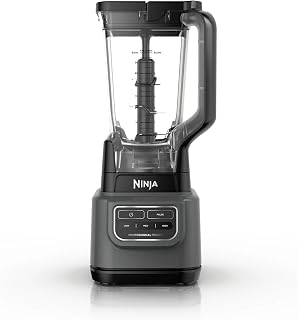
Budget pick: Ninja Professional 72 Oz Countertop Blender with 1000-Watt Base and Total Crushing Technology for-Smoothies, Ice and Frozen Fruit, Black (Renewed)
 Visit on Amazon →
Ninja is the best budget pick that actually crushes ice, and the reason is the blade stack. The stacked blades create a column of cutting surfaces up the middle of the jar instead of one blade at the bottom, so frozen fruit gets hit on the way down and on the way back up. That design is why this machine handles a full tray of ice without you standing over it with a spatula. The 72 ounce jar is big enough for a family batch, which matters more than people admit. Nobody blends one smoothie forever.
Two caveats, and I want you to hear both. First, this listing is for a renewed unit, so inspect the jar seal the day it arrives and confirm the return window before you commit. Second, the plastic jar is the weak point on every Ninja I have put through the gauntlet. The motor and the blade stack hold up. The jar is what ages, especially at the base seal, and a cracked seal is what eventually ends these machines. Hand wash the jar if you want it to last.
Flaws but not dealbreakers: The base is light and the jar is tall, so on a slick counter it can drift at high speed. Put a damp towel under it. Buyers who want a quiet machine should look elsewhere, because this one is loud and honest about it.
Anyone feeding a family, blending ice for cold drinks, or making smoothies in batches should start here.
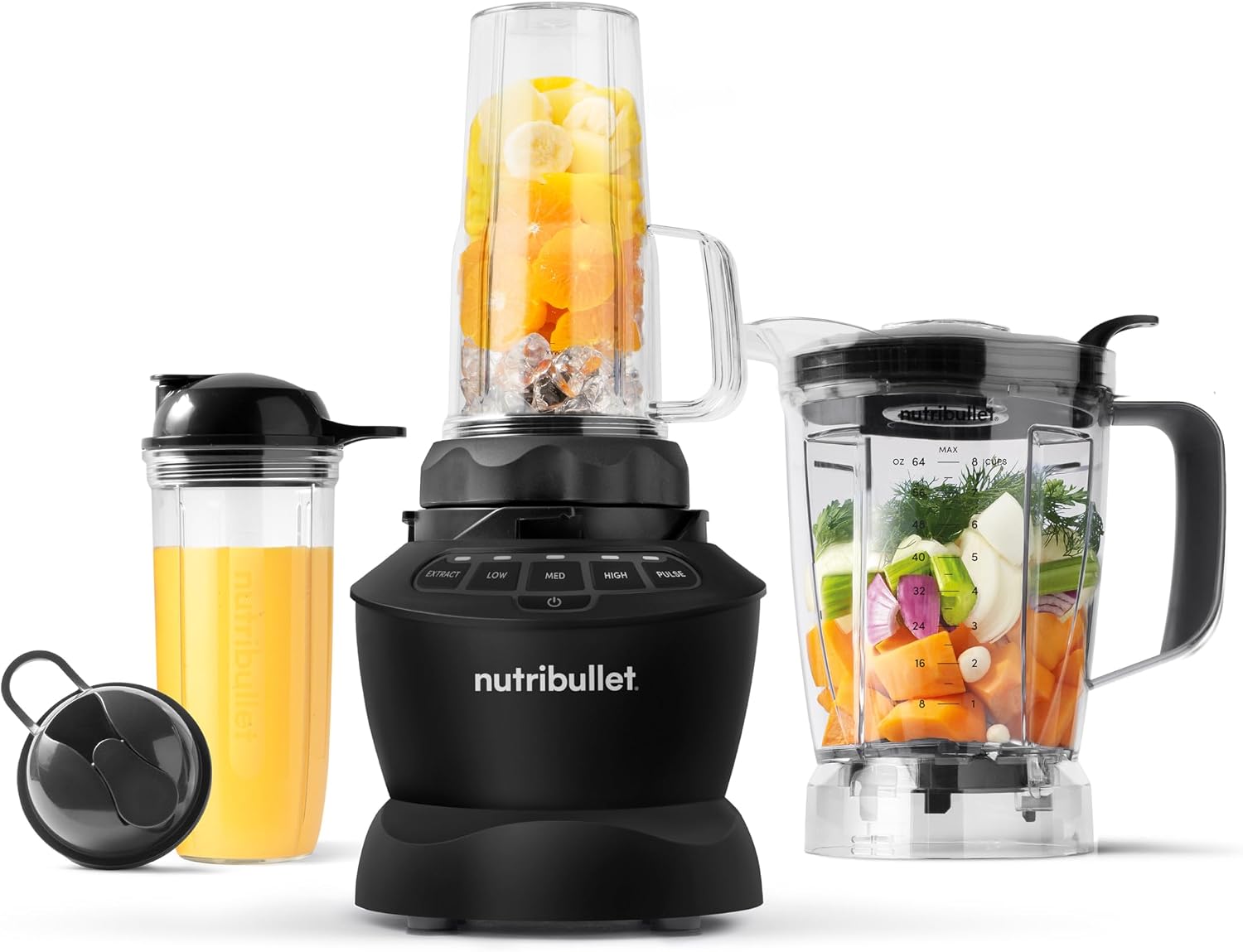
Runner-up: nutribullet® Full-Size Blender Combo, 1200W, Matte Black, NBF50500AK
 Visit on Amazon →
NutriBullet is fine for single smoothies, and the combo format is the smartest thing about this machine. You get a full-size jar for batch blending and single-serve cups for the mornings when you are running out the door with a bag on your shoulder. The 1,200 watt base has more headroom than the price suggests, and the full-size jar gives the blades enough room to build a vortex, which is the part single-serve cups struggle with.
Here is my honest read, and it comes from the shop side of my brain. The cups are the graveyard of good intentions. I make fun of single-serve cups and I own three of them, so take that for what it is worth. Cups crack, they are easy to overtighten, and they strain a motor on frozen fruit because there is no room for the fruit to move. Use the full-size jar for anything frozen, and save the cups for yogurt, protein powder, and soft fruit.
Flaws but not dealbreakers: The motor strains on dense frozen loads if you rush it. Load frozen fruit in smaller increments and give the machine a rest between blends. This is a home machine, not a commercial one, and it will tell you when you forget that.
Anyone in a small kitchen, or anyone who wants one machine for both a big batch and a to-go cup, will get the most out of this one.
The actual blending workflow
This works on either machine above, and on most full-size blenders with a decent jar. Follow the order. The order is the whole trick.
Step one: liquid in the bottom. Two to four ounces of water, milk, or juice. Not ice. Not fruit. Liquid first, so the blades have something to grab and the vortex has something to build on.
Step two: soft ingredients next. Fresh fruit, yogurt, nut butter, protein powder, leafy greens. Greens go in early and close to the blades, because kale stems are the toughest thing most people put in a blender, and they need blade contact from the first second.
Step three: frozen fruit last, on top. This is the step everyone reverses. Frozen fruit on top of the liquid gets pulled down into the blades as the vortex forms. Frozen fruit packed at the bottom just sits there and stalls the motor.
Step four: fill to two thirds, no more. Leave the top third of the jar empty. Frozen fruit expands as it breaks down. An overfilled jar cannot circulate, and a blender that cannot circulate cannot blend.
Step five: start low, then go high. Start on the lowest speed for five to ten seconds to break the fruit into chunks and get things moving. Then step up. Starting on high with a full jar of frozen fruit is how you burn a motor and how you get a smoothie with whole strawberries in it.
Step six: use the tamper, or stop and scrape. If the blend stalls, do not add more liquid. That is how you end up with a smoothie the consistency of milk. Push the fruit down with the tamper, or stop the machine, scrape the sides with a spatula, and start again on low.
Step seven: pulse for texture, run for smooth. Short bursts chop without pureeing. Continuous running makes it silky. If you want texture, pulse. If you want a proper smoothie, run it until the sound changes from chunky to steady.
Step eight: finish with ice if you want it cold and thick. Ice goes in last, after the fruit has broken down, and it goes in on top. Crushed ice into a finished smoothie thickens it without watering it down the way extra liquid does.
Where frozen smoothies go wrong
Three failures cover almost every bad smoothie I have ever been handed.
The first is a stalled vortex. The fruit is spinning in a cavity of air above the blades and nothing is touching metal. Fix it with the tamper or a scrape, not with more liquid.
The second is a motor that smells hot. That is a load problem, not a machine problem, and it usually means the jar was overfilled or the fruit went in frozen and packed. Blend in smaller batches and give the machine a rest.
The third is a jar that cracks at the base seal. That is a cleaning and handling problem. Do not slam the jar down on the base, do not overtighten a blade assembly, and hand wash anything you want to keep for years.
The competition and why it lost
If your budget goes higher, the conversation changes. A Vitamix 5200 is the workhorse I trust for commercial volume, and it is a different price tier entirely. Blendtec is the better puree machine, with a jar design that pulls everything down, and it is loud enough to wake the neighbors. Both are excellent and neither is what this guide is about.
The Oster is the good-enough classic. It will never be great, and it will never die. KitchenAid's blender is the one I would skip, because a pretty heavy machine with a jar seal that fails early is not a bargain at any price.
The point is that you do not need a commercial machine to make a good frozen smoothie. You need a jar that pulls food down, a blade stack that grabs, and the discipline to load the jar in the right order.
What this all costs
Both machines in this guide are budget-tier, and that is deliberate. The math that matters is not the sticker price, it is the cost per smoothie and how many years the machine stays on your counter. A blender that gets used five mornings a week for three years costs you almost nothing per smoothie. A blender that sits in a cabinet because it stalls on frozen fruit costs you the full price of the machine plus the smoothies you bought on the way to work instead.
Spend the money once, load the jar in the right order, hand wash the parts that matter, and stop blaming watts for a geometry problem. Your blender was built to do this. Let it.