I ran a juice and smoothie bar in San Diego for seven years, which means I have made north of 400 smoothies in a single shift and killed more blender motors than most people will own in a lifetime. Frozen mango by the case, kale stems, almond butter, ice by the bucket. So when I compare blenders for smoothies, I am not comparing wattage stickers. I am comparing jar geometry, blade path, seal quality, and how fast the whole thing comes apart for cleaning. That is the entire game.
These four machines are not four versions of the same appliance. One is a full-size pitcher blender built to a budget. One is a combo set with a pitcher and a to-go cup. One is a corded hand blender with attachments. One is a portable cup you blend in and carry out the door. Choosing between them is less about which one is "best" and more about which job you actually have.
Related: How to Clean a Blender Jar Without Cracking the Base Seal
For most kitchens, the magic bullet Combo Blender is the strongest pick of this group, because it covers both jobs, a 48oz pitcher and a 16oz to-go cup, in one purchase at the budget end of the field. The KitchenAid hand blender is the one to reach for if you blend soup in the pot or puree in a cup instead of a jar. The Ninja Blast Max is the only true portable here. The Hamilton Beach Power Elite is the plain full-size pitcher for someone who wants one jar, one button, and no accessories to lose.
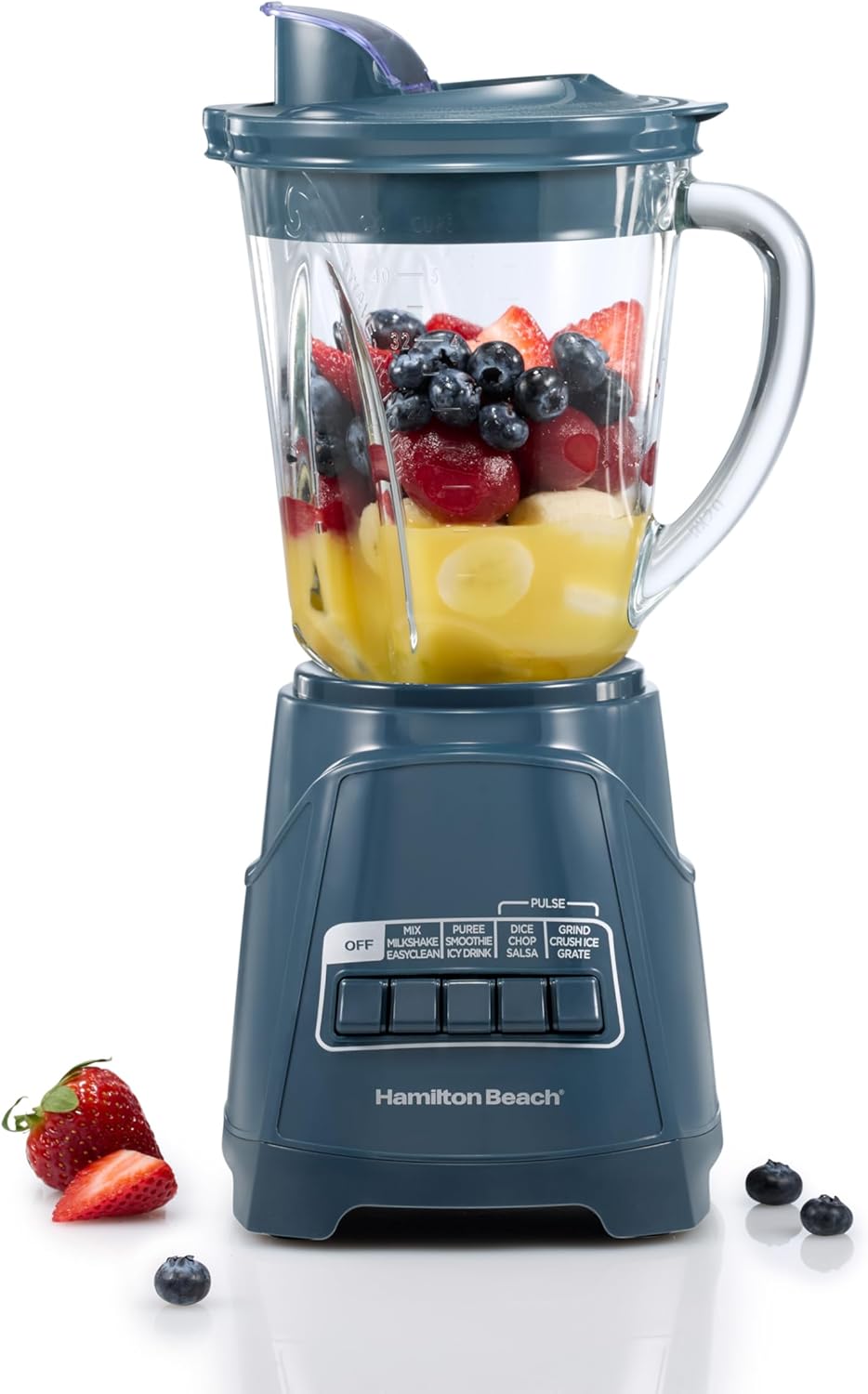
Hamilton Beach Power Elite Blender For Smoothies With Wave Action System
Full-size pitcher with a wave action jar designed to keep ingredients circulating into the blades, plus dead-simple one-jar operation
No to-go cup, no variable speed, and a single jar limits you to batch blending
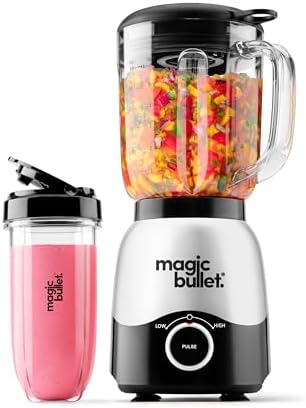
magic bullet Combo Blender, 600W, 48oz Pitcher, 16oz Cup with To-Go Lid, Easy Cleaning, Cross Blade, for Smoothies, Sauces, Shakes, Salsa, Hot Blends, Silver, MBF50200
Two vessels in one box: a 48oz pitcher for batches and a 16oz cup with a to-go lid, driven by a 600W motor and a cross blade, with a stated easy-cleaning design
The pitcher is smaller than a full-size machine, so a big batch takes a second round
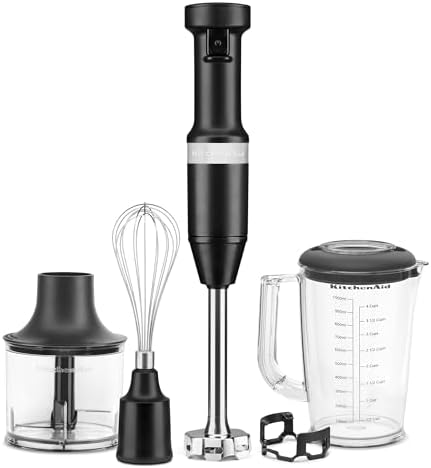
KitchenAid Variable Speed Corded Hand Blender with Attachments, KHBV83
Variable speed control, corded power that never runs out, and attachments that let you blend directly in the pot, cup, or bowl with no jar to wash
It is not a jar blender, so it will never crush a full pitcher of ice the way a dedicated machine does
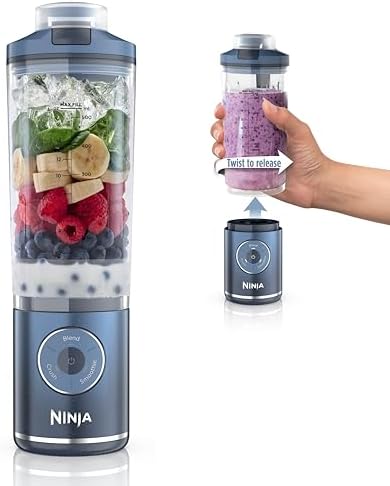
Ninja Blast Max Portable Blender, Twist & Go, 22oz, Navy, BC251NV
A 22oz cup you blend in and carry out the door, with Twist & Go operation that removes the guesswork
One serving at a time, and a portable motor is not built for nut butter or a full tray of ice
Prices and availability were captured from Amazon Creators API and may change.
How I judge a blender for smoothies
Every machine I take seriously has to answer four questions before I care about anything else on the box.
Does it turn ice into snow in about 30 seconds, or does it leave gravel at the bottom? Does the jar pull a thick blend down into the blade path without me standing there with a spatula like an idiot? Does the base stay planted on the counter at high speed, or does it walk toward the edge? And would this thing have survived a Saturday shift at my old shop, where the machine ran continuously for six hours?
Those four questions are the reason I do not lead with wattage. I have watched a 600W machine with a well-shaped jar out-blend a 1,000W machine with a jar that cannot circulate. The motor only matters if the food actually reaches the blades. Everything below is filtered through that lens.
Jar geometry beats wattage every time
Jar geometry is how the shape of the vessel funnels food into the blade path. It is the real difference between a blender that works and a blender that just makes noise.
A wide, tall pitcher with a tapered bottom does the job passively. Frozen fruit gets thrown up the wall, falls back toward the center, and gets pulled down again. That is why the Hamilton Beach Power Elite's wave action jar design and the magic bullet's cross blade are the two specs worth reading on this page. They are both attempts at the same problem: keeping solids in contact with the blades instead of spinning in a pocket of air above them.
Narrow personal cups solve circulation differently. There is less distance to travel, so a smaller motor can finish a single serving. What it cannot do is handle volume. Pack a 22oz cup too full of frozen mango and you get a smoothie with a pocket of whole fruit at the bottom, no matter how long you hold the button.
The practical takeaway: match the jar to the batch size you actually make. If you blend two smoothies at a time, buy a pitcher. If you blend one and leave the house, buy a cup.
Full-size pitcher versus personal cup, the trade-off nobody explains
Here is the tension that decides most purchases. A full-size pitcher is more capable and more annoying. A personal cup is less capable and more likely to get used.
Pitchers win on volume, ice, and anything thick. They also take up counter or cabinet space, they are heavier to rinse, and the base seal is the part that fails first on cheap units. If you have ever owned a blender that started leaking a thin brown line onto the counter, that was the base seal, and it happened because the jar was designed to be cheap rather than to be disassembled.
Cups win on habit. A blender you can rinse in 20 seconds and drop in a bag is a blender you will actually use on a Tuesday. That is not a small thing. My rule is simple: a blender you are scared to put in the dishwasher is a blender you will stop using, and a blender you stop using is a $70 paperweight.
The magic bullet Combo Blender is interesting precisely because it refuses to choose. You get the 48oz pitcher for batch work and the 16oz cup with a to-go lid for the morning sprint. That dual setup is why it sits at the top of this comparison.
The four machines, one at a time
Hamilton Beach Power Elite Blender For Smoothies With Wave Action System
This is the traditional shape of a budget blender: one full-size pitcher, one base, one set of controls, and a wave action jar meant to keep the blend moving. If your mental image of a blender is a pitcher on a counter, this is that image.
The upside is simplicity and volume. Nothing to lose, nothing to assemble, and a pitcher that handles a family batch of smoothie in one go. The wave action design is the part doing the real work here, since a jar that keeps ingredients cycling lets a modest motor punch above its class.
The downside is flexibility. There is no to-go cup, so the single-serving smoothie becomes a full pitcher you now have to wash. There is no variable speed, so you are working with whatever the control gives you rather than dialing in a slow fold for salsa or a fast rip for ice. And tamper-free designs on thick blends are a pet peeve of mine for a reason: when the blend stalls, you have no tool to fix it, only a spatula and hope.
Buy it if you want one jar, batch blending, and the lowest complexity in the group. Skip it if you blend single servings most days.
magic bullet Combo Blender, 600W, 48oz Pitcher, 16oz Cup with To-Go Lid
The combo setup is the most complete package on this page. A 600W motor, a 48oz pitcher for batches, a 16oz cup with a to-go lid for the road, a cross blade, and a stated easy-cleaning design that includes hot blends and sauces alongside smoothies and shakes.
The cross blade is the piece I care about. A blade that crosses the full diameter of the cup grabs fruit from more than one angle, which is why this class of machine handles frozen fruit better than its motor size suggests. Combine that with the pitcher and you have a machine that covers both of the jobs people actually have.
Where it gives ground is volume. A 48oz pitcher is a real pitcher, but it is not a commercial-size jar, so a large batch means blending twice. And in any combo kit, the small cup is the part that lives in the dishwasher while the pitcher sits in the cabinet, which is fine as long as you accept that you bought two tools and will mostly use one.
For most households, though, this is the pick. You get the batch capability and the grab-and-go cup without buying two appliances.
KitchenAid Variable Speed Corded Hand Blender with Attachments, KHBV83
This is a different animal, and it deserves to be judged on its own terms. A corded hand blender with variable speed and attachments is not competing with a pitcher blender. It is competing with a ladle and a food processor.
The advantage is that you blend in the vessel you already have. Soup in the pot, sauce in the pan, puree in a cup, no jar to wash and nothing to pour back and forth. Variable speed gives you the slow start that keeps hot liquid from splashing and the higher setting for a smooth puree. Corded means you are never hunting for a charge mid-recipe, which is more than the portable crowd can say.
The limitation is honest and unavoidable: it is not a jar blender. You cannot crush a full pitcher of ice with it, and you cannot walk away from it. It also requires a hand on the trigger the entire time, which matters if you are making smoothies for a family rather than soup for two.
Buy it if your blending is mostly savory, in-pot, or small-batch. Skip it if smoothies are the whole point.
Ninja Blast Max Portable Blender, Twist & Go, 22oz, Navy, BC251NV
The Blast Max is the only genuinely portable machine in this group. A 22oz cup, Twist & Go operation, and a design that lets you blend and then carry the same vessel.
Ninja's blade stack reputation is earned in the budget category. The brand's approach to blade geometry is the reason I will recommend a Ninja to someone who wants ice crushed without spending premium money. The Twist & Go format removes the guesswork, which matters more than people admit: the fewer decisions between you and a smoothie, the more smoothies you make.
The trade-offs are the trade-offs of every portable. One serving at a time. A motor that is not built for almond butter, a full tray of ice, or anything you would call a workhorse task. And 22oz is a generous single serving but still a single serving.
Buy it if you blend at the gym, the office, or anywhere other than your kitchen counter. Skip it if you are feeding more than one person.
Ice, frozen fruit, and nut butter, what each design can handle
Ice is the honest test. It is also the claim every blender box makes and almost none of them back up. My rule is that no "crushes ice" claim counts without a snow-cone test: load it, run it, and look for snow rather than gravel.
Pitcher machines with a proper circulation design have the advantage here, because ice needs to fall back into the blades repeatedly. The Hamilton Beach wave action jar and the magic bullet's cross blade are both engineered toward that motion. Personal cups can do ice in small amounts, but pack them and you will stall.
Frozen fruit is easier than ice, and greens are easier than frozen fruit. Kale stems are the divider: they wrap around blades instead of cutting, which is a circulation problem, not a power problem. Nut butter is the hardest thing you can ask a home blender to do. It is thick, it does not flow, and it needs either a tamper or a jar that pulls the mass down on its own. A hand blender in a deep cup handles small amounts of nut butter surprisingly well, because you control the movement.
Cleaning, seals, and the dishwasher question
Clean equipment is the only equipment that matters. A health inspector taught me that, and it is the reason I rank cleanup above almost every spec.
Three things to check on any machine you are considering. First, does the jar come apart at the base? A jar that cannot be disassembled will eventually grow something in the seal. Second, are the blade assemblies removable, or do you have to reach around a fixed blade with a sponge? Third, does anything go in the dishwasher without warping?
This is where the combo and portable formats quietly win. Cups rinse fast and fit anywhere. The magic bullet kit's stated easy-cleaning design is aimed at exactly this problem, and the KitchenAid hand blender sidesteps it entirely, because the blending vessel is your own pot or cup and the only part you wash is the shaft.
The full-size pitcher is the machine you have to commit to. It is not hard to clean, but it is the one that punishes laziness, and laziness is what kills blender usage in a home kitchen.
Which blender for smoothies should you buy?
If you make smoothies most days and want one purchase to cover batch and single-serve, the magic bullet Combo Blender is the pick. Pitcher plus to-go cup, a 600W motor, a cross blade, and a cleaning story that does not require a disassembly project.
If you want a classic full-size pitcher with no accessories to lose, the Hamilton Beach Power Elite is the straightforward choice, and the wave action jar is doing real work at that end of the market.
If your blending leans savory, in-pot, or small-batch, the KitchenAid Variable Speed Corded Hand Blender with attachments is a better tool than any jar machine for those jobs.
And if you need to blend away from your kitchen, the Ninja Blast Max is the only machine here that travels.
Whichever you choose, run my four questions against it before you commit: ice to snow, thick blends pulled down, base stays planted, and cleanup under a minute. A blender that passes all four is a blender you will still be using three years from now.
Visit on Amazon → for the Hamilton Beach Power Elite. Visit on Amazon → for the magic bullet Combo Blender. Visit on Amazon → for the KitchenAid Variable Speed Corded Hand Blender. Visit on Amazon → for the Ninja Blast Max Portable Blender.