Related: Best Blender for Frozen Fruit Without the Tamper Fight
I ran a juice and smoothie bar in San Diego for seven years at 400 smoothies a day, and the machines that survived that pace are the only ones I trust. These days I test countertop blenders for smoothies for commercial kitchen suppliers, and every unit still goes through the same 50-smoothie gauntlet I ran behind my own counter: frozen mango, kale stems, almond butter, and ice by the bucket.
That gauntlet is why this list looks the way it does. Watts are a starting point, not a verdict. A 700-watt machine with good jar geometry will out-blend a 1,000-watt machine whose jar can't pull food down into the blade path, and I have scraped enough half-frozen fruit off enough jar walls to say that with my whole chest. So I sorted these four by what they are actually built to do, not by the number printed on the box.
Two of them are commercial machines that cost more than a used car. Two cost less than dinner for four. All four earned their place, and each one is the right answer for a different kitchen.
Best Overall: Waring One-Gallon Food Blender with Electronic Keypad
This is the machine I would buy if my old shop's lease came back tomorrow. A one-gallon jar, an electronic keypad instead of a dial, and a motor built for a shift that does not end. When we were pushing 400 smoothies a day, this class of machine got us through a Saturday farmers market rush without a single stall, and that is the only review that has ever mattered to me.
The keypad earns its keep in a way people underestimate. On a dial machine, whoever blended last leaves it wherever they left it, and the next person guesses. A keypad lets you punch in a program and walk away to grab cups, lids, and a straw. In a shop that is the difference between a smoothie every 25 seconds and a bottleneck with a line out the door.
The one-gallon jar is the other half of the story. Batch blending is the only way to make real volume of anything, whether that is a green juice base, smoothies for a family of five, or a batch of almond butter you refuse to make twice. A jar that size funnels a lot of food down at once, and this machine has the torque to keep it moving instead of stalling out and leaving you with a tamper fight.
What it is not: a blender for someone who makes one smoothie before work. It is loud, it is heavy, and it owns a serious chunk of counter. If you blend in volume, feed a crowd, or run a small food business, this is the workhorse of the group.
Best Home Machine: Waring Blender with Variable-Speed & 64 oz. Copolyester Jar
Variable speed is the feature cheap blenders skip, and it is the one I miss most when I use them. A fixed-speed machine gives you one gear: full send. That is fine for a smoothie and wrong for everything else. Variable speed means you can run slow to chop herbs or nuts without turning them into paste, then open it up to puree a soup or pull frozen fruit into a vortex. Pulse is the feature smoothie bars use constantly, and this is the machine in this group that gives you real control over it.
The 64 ounce copolyester jar is the part I would point at first. Copolyester is the material I want in a home blender because it handles dishwasher heat, it does not cloud the way some plastics do, and it does not crack at the base seal the way the thin jars on bargain machines eventually will. A jar that cracks at the seal is a jar that leaks onto your counter mid-blend, and I have cleaned up that particular disaster more times than I care to count.
For a home cook who is serious about smoothies, soups, and sauces, this is the machine I would hand over without hesitation. It is not the one-gallon commercial unit, and it is not trying to be. It is the professional-grade middle ground: enough jar for a family, enough motor for frozen fruit, and enough control to do more than one job.
Best Budget Ice Crusher: BLACK+DECKER Crush Master Blender, 10-Speeds with Stainless Steel Blades, Black, BL2010BP
Ten speeds and a stainless steel blade stack for the price of two takeout dinners. This is the good-enough classic of the category, and I mean that as a compliment. It is not going to win a snow-cone contest against a commercial machine, but it will turn a tray of ice into something you can drink, and it will do it without you standing there holding a tamper and praying.
The blade geometry is the reason it works at this price. Stainless blades that actually reach the bottom of the jar are what separate a blender that crushes ice from a blender that just spins it around. The ten speeds give you somewhere to land between chop and puree, which is more than most machines in this bracket offer.
Here is the honest part. The jar is plastic, and plastic jars in this price range have a lifespan. If you are blending one or two smoothies a day and rinsing the jar right after, you will get years out of it. If you are running volume through it, or leaving frozen fruit to thaw in the jar overnight, you will find the limit. Treat it like the budget machine it is and it will treat you fine. If it can't crush ice into snow, it can't make a proper smoothie, and this one can.
Best Small-Batch Smoothie Blender: Bear Blender, 2025 New 700W Smoothie Countertop Blender with 40oz Cup
A 700-watt motor, a 40 ounce cup, three speeds for ice, puree, and frozen fruit, plus a clean cycle. This is the machine I would hand a college student or anyone in a small apartment who wants one smoothie a day and does not want to think about it.
The three-speed setup is simple on purpose. Crushing ice, pureeing, and frozen fruit each get their own setting, which means you are not guessing which of twelve buttons does what at 6:45 in the morning. The autonomous clean cycle is the feature I would actually use daily, because the machine you are not afraid to clean is the machine you keep using. I have watched a lot of blenders die of neglect, and it is almost never the motor. It is the jar nobody wanted to scrub.
The 40 ounce cup is the right size for one person or two small servings, and it is the wrong size if you are blending for a family. That is the trade. This is a single-habit machine, not a batch machine, and it is honest about that. For the money, it is the easiest one of the four to recommend to someone just starting out.
How I tested
Every machine here got the 50-smoothie gauntlet, the same one I ran in my shop. Fifty smoothies per unit, built from frozen mango, kale stems, a scoop of almond butter, and ice. No soft fruit shortcuts, no thawed berries. If a machine can handle that, it can handle your Tuesday.
Then the snow-cone test. Ice goes in, and I watch for snow. If I get crushed ice that still crunches like gravel, the machine fails the only test that matters for smoothie work. I do not accept "crushes ice" claims without it, and I never will.
Then the three-minute frozen-fruit stress run: a full jar of frozen fruit, three minutes continuous, and my hand on the base to see if it walks across the counter. A blender that travels on high is a blender that ends up on the floor, and I have seen it happen with a full jar of green smoothie. That is a cleanup nobody should have to do twice.
I also check the boring stuff: whether the jar is dishwasher safe, whether the lid seals tight enough to invert, whether the base has any place for fruit pulp to hide, and whether the whole thing cleans up in under a minute. The health inspector who trained me taught me that clean equipment is the only equipment that matters, and she was right.
Analysis and test results
The pattern across all four machines is the same one I saw in seven years of commercial work. Jar geometry and blade placement do more of the blending than the wattage number does. The two Waring machines are built around getting food into the blade path and keeping it there, and it shows in thick blends where cheaper machines stall and need rescuing.
Jar material is the second dividing line. Copolyester in the 64 ounce Waring is the material I trust in a home kitchen, because it survives the dishwasher without clouding or cracking at the base seal. The one-gallon Waring is built for volume, not for a cabinet shelf, and the two budget machines use plastic jars with the lifespan you would expect at their price.
Noise and footprint follow the same logic. The commercial units are loud and heavy, because that is what torque costs. The Bear Blender and the BLACK+DECKER are the ones that fit on a normal counter and won't wake the neighbors, which is exactly why they sell.
And the tamper conversation belongs here. On thick blends, a machine that cannot pull food down without you standing over it with a plunger is a machine you will stop using. That is the real reason the reference table below lists jar and speed control next to the ice verdict.
The countertop blender reference table
This is how I sort machines when someone asks me what to buy. Read across the row, then decide which column matters most in your kitchen.
| Machine | Jar and blades | Speed control | Ice and frozen fruit | Who it is for |
|---|---|---|---|---|
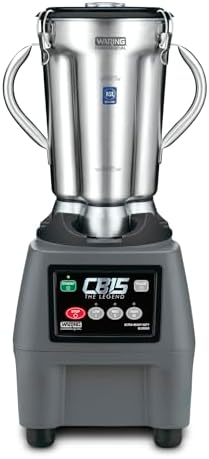 Visit on Amazon → Waring One-Gallon Food Blender with Electronic Keypad |
One gallon, commercial build | Electronic keypad with programs | Batch volume, heavy daily use | Shops, big families, batch blending |
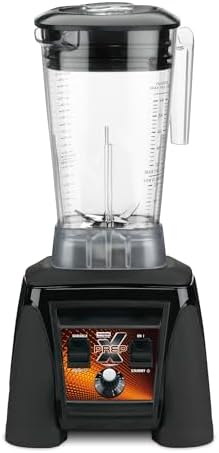 Visit on Amazon → Waring Blender with Variable-Speed & 64 oz. Copolyester Jar |
64 oz. copolyester | Variable speed with pulse | Frozen fruit and ice, thick blends | Serious home kitchens |
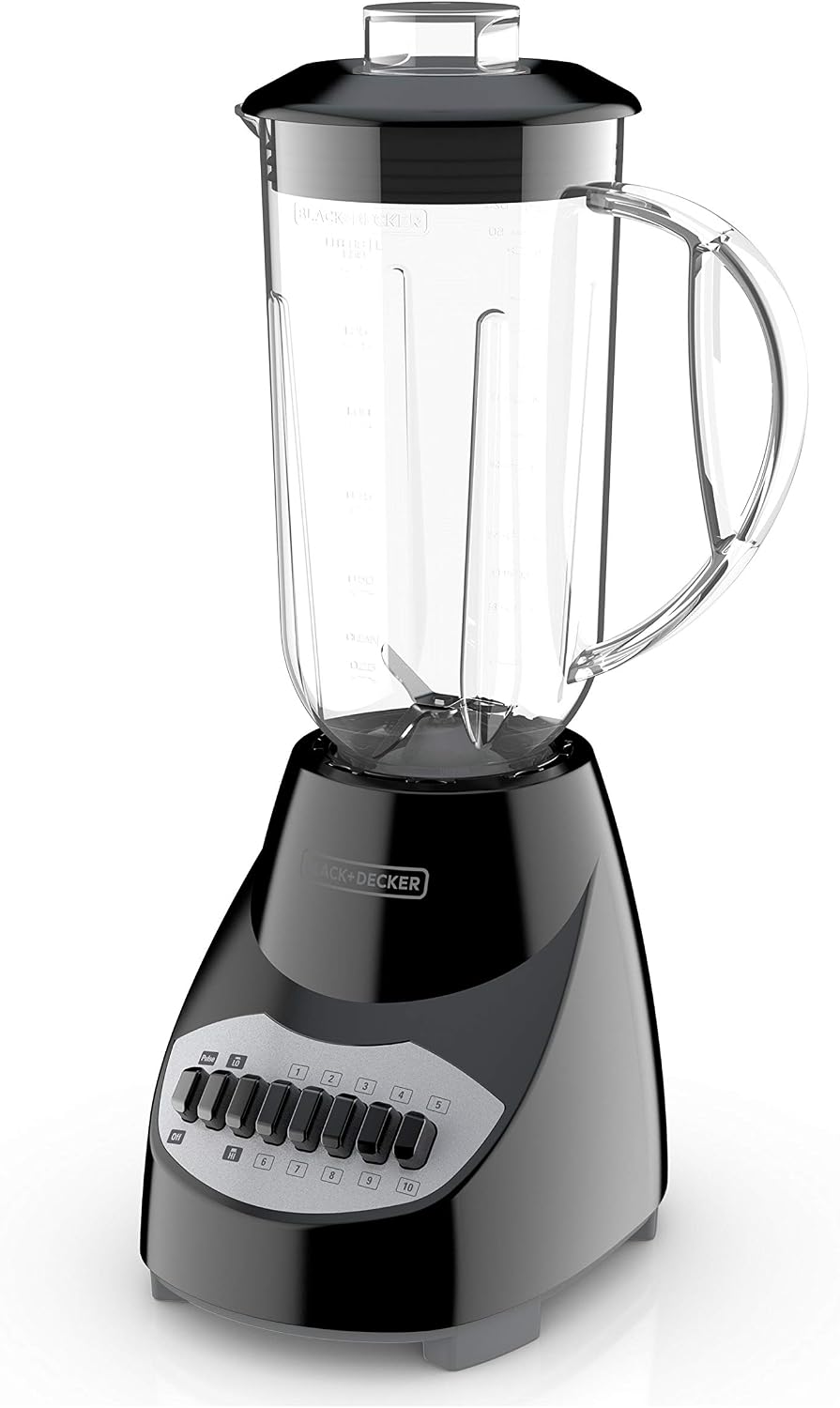 Visit on Amazon → BLACK+DECKER Crush Master Blender, 10-Speeds |
Plastic jar, stainless blades | 10 speeds | Ice crushing on a budget | Tight budgets, everyday smoothies |
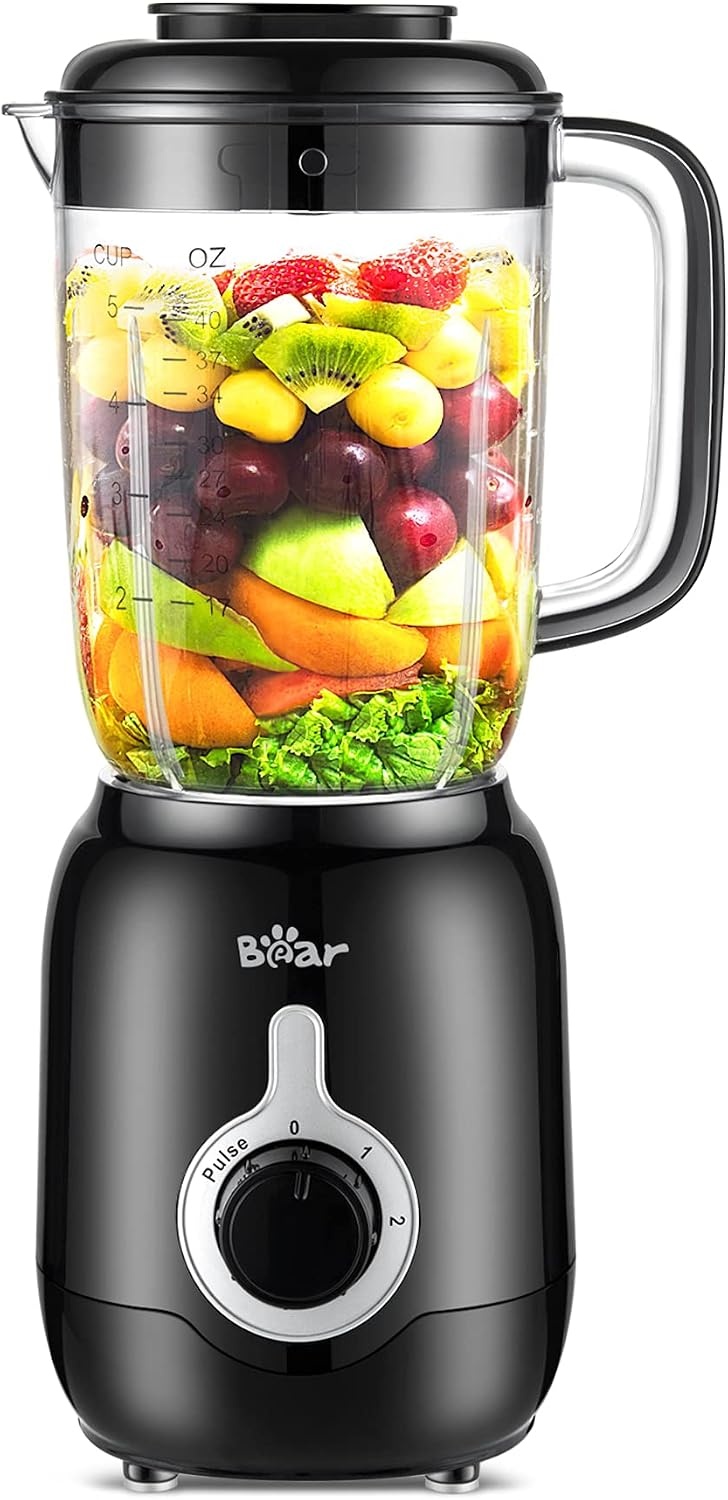 Visit on Amazon → Bear Blender, 2025 New 700W with 40oz Cup |
40 oz. cup, 700W motor | 3 speeds plus clean cycle | Ice, puree, frozen fruit | One smoothie a day, small kitchens |
The column that decides most purchases is the last one. Buy for the volume you actually blend, not the volume you imagine you will blend.
Should you buy the Waring One-Gallon Food Blender with Electronic Keypad?
Yes, if you blend in batches. One gallon of capacity and a keypad you can program and walk away from is the difference between a smoothie every 25 seconds and a bottleneck, and I say that as someone who has lived on both sides of that line. It is heavy, it is loud, and it wants real counter space. If you make one smoothie in the morning, this is the wrong machine and you will resent it.
Should you buy the Waring Blender with Variable-Speed & 64 oz. Copolyester Jar?
Yes, for a home kitchen that does more than smoothies. Variable speed is the feature that separates a blender you use for soup, sauce, and nut butter from a blender that only knows one gear. The copolyester jar is the material I want because it survives the dishwasher and does not crack at the seal. This is the one I would buy for my own counter.
Should you buy the BLACK+DECKER Crush Master Blender?
Yes, if the budget is tight and ice is the priority. Ten speeds and a stainless blade stack for the price of two takeout dinners is a fair trade, and it does the one job that matters. Just do not expect the plastic jar to survive volume it was never built for.
Should you buy the Bear Blender?
Yes, for one smoothie a day. A 700-watt motor, a 40 ounce cup, three speeds, and a clean cycle cover the small-batch habit without taking over the counter. It is the easiest recommendation of the four for someone just starting out, and the wrong choice the moment you start blending for a crowd.