Related: Frozen Fruit Smoothie Ratios That Don't Turn to Slush
I have run more smoothies through more machines than any person should, and after seven years of it I can tell you the best blenders for smoothies are not the loudest or the most expensive. They are the ones you will still reach for on a Tuesday morning when you are already late. I owned a juice and smoothie bar in San Diego that pushed out 400 drinks a day, then spent years testing equipment for commercial kitchen suppliers. My kitchen has three blenders on the counter right now, and two of them cost less than a dinner out.
This guide is about four pieces of equipment: a glass-jar countertop blender, a personal blender, a hand blender, and the one accessory that makes the hand blender worth owning. I am not going to tell you a $500 machine is the only answer. I am going to tell you which of these does which job, and where each one gives up.
Oster Classic Series 8-Speed Blender: the jar that refuses to die
Oster is the good enough classic. It will never be great, and it will never die either, and I mean that as a compliment. The 6-cup jar is glass, which is the single most important thing about this machine. Glass does not cloud after a hundred kale smoothies. It does not hold onto the smell of onion after you blend a soup. It does not crack at the base seal the way budget plastic jars do after a year of dishwasher cycles.
Eight speeds is more than anyone needs for a smoothie, but the range earns its keep on sauces and soups, where you want a slow fold rather than a vortex. The gray base is plain, the lid is plain, and there is no tamper, which matters if you plan to make anything thick. Nut butter in a jar like this means stopping to scrape down the sides with a spatula every thirty seconds. I have done it. It works. It is not fun.
Where this machine fits: a household that wants one blender for pancake batter, tomato sauce, a weekend margarita, and the occasional frozen drink, and does not want to think about it again for a decade. If you are chasing a glass-smooth green smoothie with kale stems and frozen mango every single morning, this is not the machine you want. If you want a blender that starts every time you press the button, it is.
NutriBullet Pro: the countertop cup for one
Single-serve cups are the graveyard of good intentions. Nobody blends one smoothie forever. But the honest case for a personal blender is that it is the machine that actually gets used, because you blend, you twist on a flip-top lid, and you walk out the door. No jar to wash, no pitcher to dry, no second cup. That convenience is worth more than any spec sheet.
The Pro runs a 900 watt motor, which is a real step up from the small original NutriBullets, and it comes with a 32 ounce cup plus 24 ounce cups and flip-top travel lids. For frozen fruit, that extra power is the difference between a smooth blend and a machine that stalls and smells hot. It handles frozen berries and banana well. Frozen mango cubes and a full cup of ice are where it starts to work hard, and you should expect to stop and shake the cup rather than push it.
Two things to know before you buy. The cups are plastic, and plastic cups crack, usually near the threads, usually at the worst time. Hand wash them if you want them to last. And this is not a family machine. If you are blending for two or three people at once, you will be running it three times, and the motor will tell you about it.
KitchenAid Variable Speed Corded Hand Blender: the pot-to-puree tool
A hand blender is the most misunderstood tool in the kitchen. People buy one thinking it replaces a countertop blender, then get frustrated when it will not crush ice. It was never going to crush ice. What it does better than any jar blender is go where the food already is.
That means soup in the pot, no ladling hot liquid into a pitcher and no second container to wash. It means tomato sauce, gravy, applesauce, baby food, and a small batch of pesto in a cup. The variable speed trigger on this KitchenAid is the feature that matters most, because you can start slow. A single-speed stick blender in a pot of hot soup is how people end up with marinara on the ceiling. Starting slow keeps the blade under the surface and the sauce in the pot.
The matte black finish is the least important thing about it, but it does look good sitting in a crock. What you should know is what it will not do: frozen fruit smoothies, nut butter, and anything that needs a vortex to pull food down into the blades. A hand blender has no jar geometry to work with, which is exactly why the right vessel matters so much.
The 27 oz measuring cup: the accessory that makes the hand blender work
Nobody puts this on a wedding registry, and it is the piece of equipment I would replace first if mine disappeared. It is a 27 ounce BPA-free beaker with a pour spout, a stable base, and clear measurements up the side. Tall and narrow is the point. When you blend in a wide bowl, the blade throws food up the walls and you spend the whole time chasing it with a spatula. In a tall beaker, the food falls back into the blade path on its own.
The stable base matters more than it sounds. A beaker that tips while you are holding a running motor in your other hand is a bad afternoon. The pour spout means you can decant a smoothie or a batch of dressing without a funnel. And the measurements let you build a recipe in the same vessel you blend in, which cuts one dish out of your life every single time.
This is also a genuinely useful measuring cup even if you never own a hand blender. It is the cup I use for pancake batter and salad dressing. The price is the kind of thing you stop thinking about after a week.
How I judge a blender
My shop ran 400 smoothies a day, so my standards come from a place where a broken machine costs real money. I run every blender through the same gauntlet: frozen mango, kale stems, ice by the bucket, and almond butter. Fifty smoothies per machine is the minimum before I form an opinion.
Four questions decide it. Does it crush ice into snow, or does it leave gravel? Does the jar pull a thick blend down into the blades without a fight, or do I need a tamper and a spatula and a prayer? Does the base walk across the counter or scream at high speed? And would it survive a shift at my old shop, where the machine never got a rest?
Most blenders fail at least one. The ones that pass are not always the expensive ones, but they are always the ones with blade geometry and jar shape working together. Watts are a starting point, not a verdict.
What the specs do not tell you
A 900 watt motor is not automatically better than a 700 watt motor. Power without a jar that funnels food into the blade path just means the machine spins fast while the frozen mango sits in a pocket above the blades. That is why a personal blender with a tall narrow cup can outperform a bigger machine with a wide pitcher on a single smoothie.
Glass beats plastic for a jar you plan to keep. It is heavier, it costs more to ship, and it is the reason the Oster in this guide will still be blending when a plastic competitor has gone cloudy and cracked. If you are buying a jar blender, look at the material before you look at the speed dial.
Dishwasher safe is not a marketing line. A blender you are scared to put in the dishwasher is a blender you will stop using, because the cleanup is the part that kills the habit. Every piece in this guide either goes in the dishwasher or rinses in seconds. That is deliberate.
The tamper question is real. Thick blends need something to push them down. If your machine has no tamper and no narrow cup to compensate, you are the tamper, and that means stopping the motor and scraping.
Reference table: what each piece is for
| Product | Type | Best for | What to know |
|---|---|---|---|
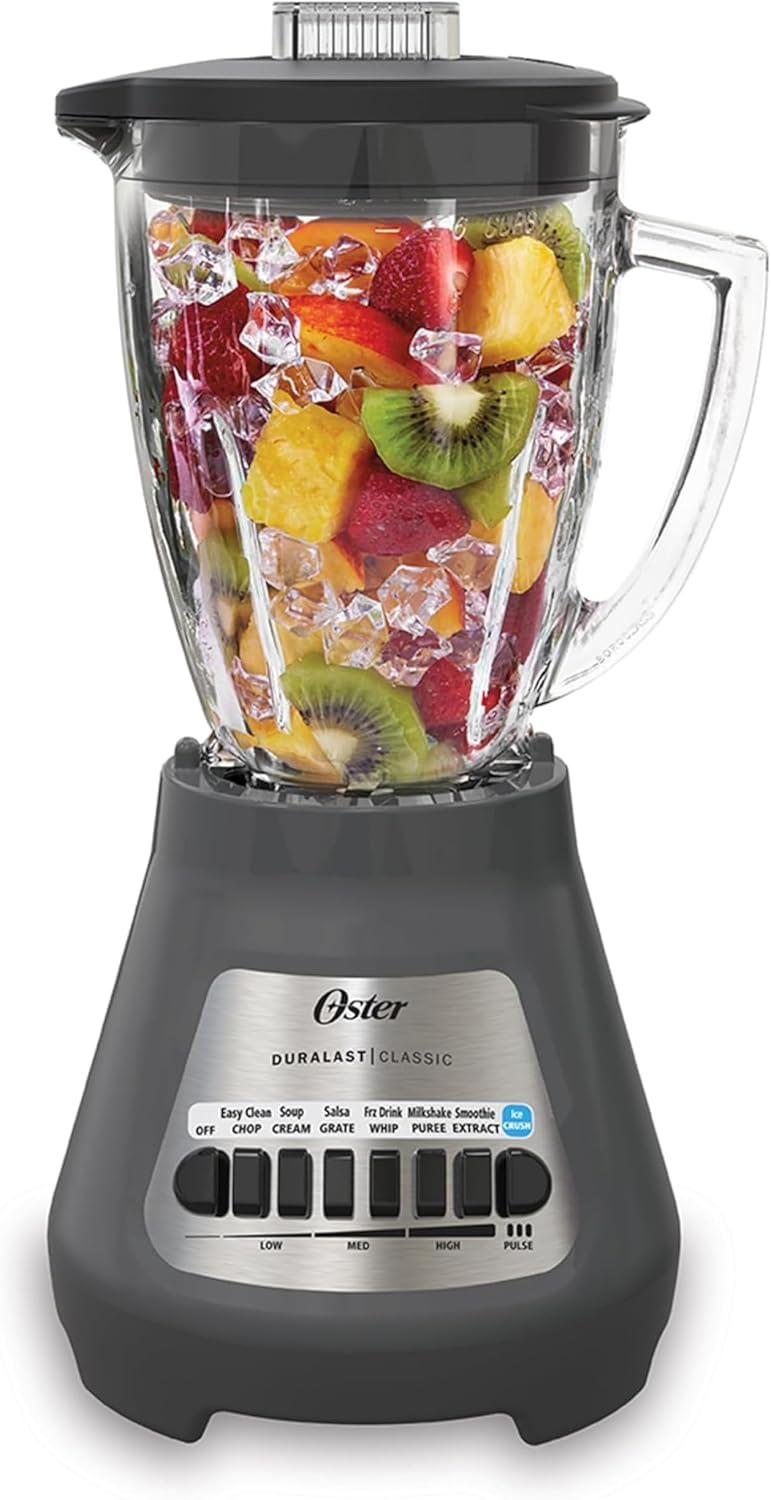 Visit on Amazon → Oster Classic Series 8-Speed Blender |
Countertop, 6-cup glass jar | Batter, sauce, weekend frozen drinks | Glass jar resists clouding and odor. No tamper, so thick blends need scraping. Visit on Amazon → |
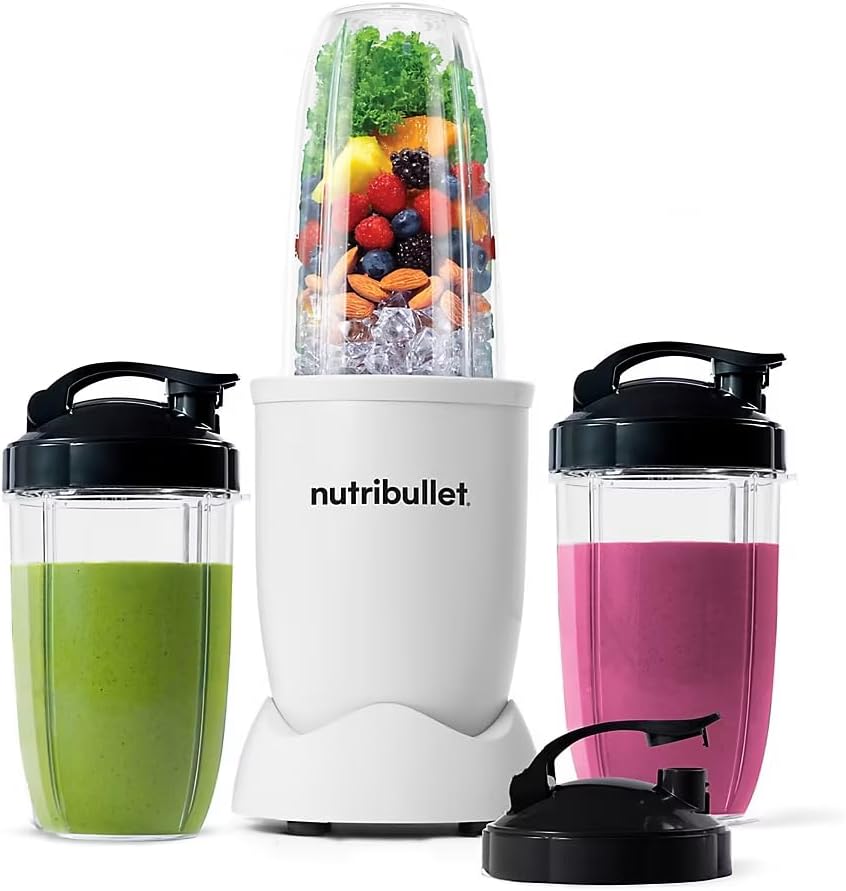 Visit on Amazon → NutriBullet Pro |
Personal blender, 900 watt | One smoothie at a time, travel lids | Tall cup helps pull frozen fruit down. Hand wash the cups to slow cracking. Visit on Amazon → |
 Visit on Amazon → KitchenAid Variable Speed Corded Hand Blender |
Hand blender, variable speed | Soup, sauce, small batches, pot-to-puree | Goes into the pot. Not built for frozen fruit or nut butter. Visit on Amazon → |
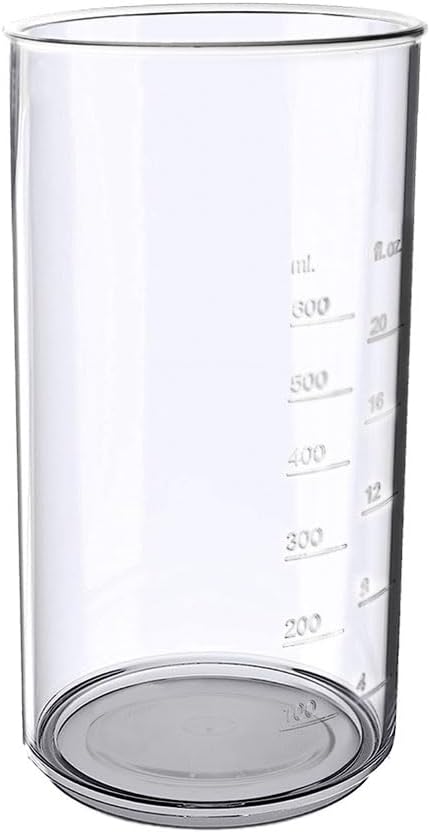 Visit on Amazon → 27 oz Measuring Cup for Immersion Blender |
Beaker, 27 ounce | Blending vessel for hand blenders, measuring and pouring | Tall narrow shape keeps food in the blade path. Stable base, pour spout, clear markings. Visit on Amazon → |
Should you buy the Oster Classic Series 8-Speed Blender?
Yes, if you want one blender that handles the ordinary jobs and refuses to quit. The glass jar is the reason to pick it over the plastic-jar machines at the same level, and eight speeds give you enough control for sauces and soups. Go in knowing it has no tamper and no jar geometry tricks. Thick blends will need a spatula. Frozen drinks will be grainy unless you add enough liquid to keep things moving.
If you are blending kale and frozen mango every morning and you want it perfectly smooth, this is not that machine. If you want a blender that is still on your counter in ten years, it is.
Should you buy the NutriBullet Pro?
Yes, if you are blending for one and you want to drink from the cup you blended in. The 900 watt motor and the taller cups make it a better frozen-fruit machine than the tiny NutriBullets people gave up on. The travel lids are the feature that keeps it in rotation, because a smoothie you can carry is a smoothie you actually make.
Be honest about the limits. It is a personal blender. Almond butter, a full tray of ice, and a double batch for the family are all jobs for something else. Hand wash the cups and it will last a lot longer than the reviews suggest.
Should you buy the KitchenAid hand blender?
Yes, if your blender jobs are soup, sauce, and small batches. Nothing else in a kitchen does pot-to-puree, and the variable speed trigger means you can start slow instead of wearing your lunch. It stores in a drawer, which is more than the countertop machines can claim.
It will not make a frozen smoothie, and anyone who tells you otherwise has not tried it. Buy it as a second tool, not as a replacement.
Should you buy the 27 oz measuring cup?
Yes, especially if you already own a hand blender. It is the cheapest thing in this guide and the one that changes how often you use the tool. Tall, narrow, stable, with a pour spout and measurements you can actually read. Buy two and stop washing one mid-recipe.