Related: Best Blender for Frozen Fruit: What Actually Crushes Ice
I spent seven years running a juice and smoothie bar that pushed out about 400 smoothies a day, and I have burned out more blender motors than most people will own in a lifetime. So when someone asks me to sort through countertop blenders for smoothies, I do not start with the wattage printed on the box. I start with the jar.
Here is why that matters. The motor gets blamed for almost everything, but jar geometry and blade design do most of the real work. A 1,400-watt motor bolted to a jar that cannot pull frozen mango down into the blades is a 1,400-watt disappointment. A modest motor paired with a jar that funnels food into the blade path will out-blend it every time.
That is the lens I use on the four products below. Two are full-size blenders, one is a rechargeable personal cup, and one is a jar accessory that people keep buying by mistake. Different jobs, different buyers, and one of them belongs in your cart only under a specific condition.
Best Overall: nutribullet SmartSense Blender Combo
This is the one I would hand a first-time buyer, because it solves the problem that ends most blender routines: it does both jobs. You get a 64-ounce pitcher for batch work, which is where soup, nut milk, and a week of smoothie base live. You also get 32-ounce and 24-ounce cups for the mornings when you want to blend and walk out the door with the same container.
The spec sheet lists 1,400 watts and a 5-speed control. Five speeds is the right number for a home machine. You want a slow start to pull thick ingredients down before you open it up, and you want enough headroom at the top for frozen fruit. A machine with only one button forces you to choose between chunky and terrified.
Here is my one honest warning about every combo system like this, and it is the thing I learned the hard way in my shop: the cups are the disposable part. Single-serve cups are where good intentions go to die, because the threads and the base seals take the abuse while the pitcher sits in the cabinet. Buy this for the pitcher, treat the cups as a bonus, and you will be happy with it for years. Buy it for the cups and you will be replacing something within a year, the same way I have cracked more personal cups than I care to admit.
The Matte White finish is a small thing, but it matters if your counter is a design decision rather than just a surface. It looks like a piece of equipment, not a gadget.
Best Budget Pick: Oster Classic Series 8-Speed Blender
Oster is the good-enough classic. It will never be great, and it will never die either, and there is real value in the second half of that sentence. The version here carries a 6-cup glass jar and an 8-speed dial, and the glass is the entire reason I am recommending it at this price.
Glass changes the ownership experience. Plastic jars fail at the base seal, which is the single most common way a blender becomes trash, and no amount of wattage saves you from a cracked seal. Glass also means you can put the jar in the dishwasher without watching it cloud up and hold onto the smell of yesterday's kale and garlic. A blender you are scared to clean is a blender you will stop using, and that rule has never once failed me.
Eight speeds on a dial is more useful than it sounds. You can start slow on a thick blend, step up as the mixture loosens, and finish without the machine walking across the counter. That last part is a genuine pet peeve of mine. Any base that travels on high speed is telling you the feet and the weight are an afterthought.
What you give up is torque. Frozen fruit and nut butter are a strain on a machine like this, and you will need to pulse and scrape more than you would with a premium motor. If your smoothie is mostly banana, yogurt, and a handful of berries, you will never notice. If you are loading kale stems and frozen mango blocks, step up.
Best for Travel: Personal Blender 500ml, USB-C, Ice Crush
A 500 ml cup blender that charges over USB-C is a specific tool for a specific person: someone blending at a desk, in a hotel room, in a dorm, or in a van. The cordless part is the whole point. No outlet negotiation, no counter real estate, no cord that is somehow always three inches too short.
My advice is to treat the ice crush claim as a promise you verify on day one. My rule in the shop was simple and it never let me down: if a machine cannot take a single ice cube and turn it into snow, it cannot make a proper smoothie, and no marketing copy changes that. So drop one cube in with a little liquid, run it, and look. If you get snow, you have a real machine. If you get pebbles, you have a travel blender that should stay away from frozen fruit and stick to soft ingredients, protein powder, and fresh fruit.
The 500 ml capacity tells you the rest of the story. That is one smoothie, not a batch. There is no pitcher here, so nobody is making soup or nut milk in it, and it is not the machine you buy to feed a household. It is the machine you buy so that your routine survives a week away from your kitchen, which is a genuinely useful thing for a blender to do.
The Add-On: KitchenAid Go Personal Blender Jar Accessory
Read the name carefully, because this is the product people buy by accident. It is a jar. A 16-ounce personal blender jar in Black Matte, sold as an accessory for the KitchenAid Go system. There is no motor in the box. If you do not already own the KitchenAid Go base, this purchase gets you a very nice cup and nothing to blend with.
If you do own the system, this is a sensible buy. Two jars means you can blend a smoothie and leave a second one chilling, or keep one jar clean while the other soaks. That is a small upgrade, and small upgrades are what actually keep a blender in rotation. The most common reason people stop using a personal blender is that the one jar is dirty, and buying a second jar is cheaper than buying a second blender.
Treat it as a replacement part or a spare, not as a starter kit, and you will be fine.
The blender reference table
This is the same table I keep for my own kitchen, sorted by job rather than by price. Match the row to how you actually blend, not to how you plan to blend.
| Product | Best for | Jar setup | Notes |
|---|---|---|---|
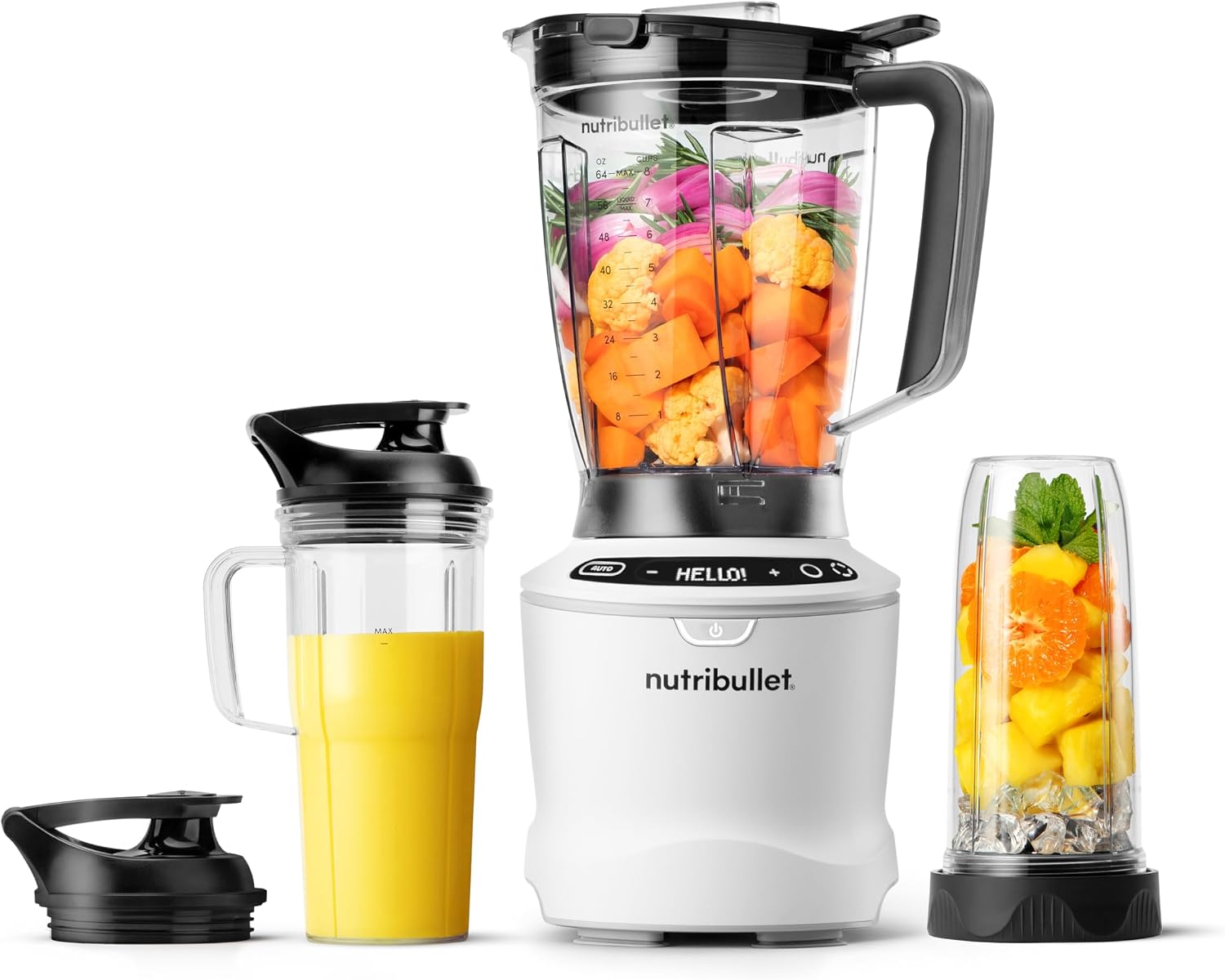 Visit on Amazon → nutribullet SmartSense Blender Combo |
Batch blending plus single servings | 64 oz pitcher, 32 oz and 24 oz cups | 1,400W, 5-speed, dishwasher-friendly containers |
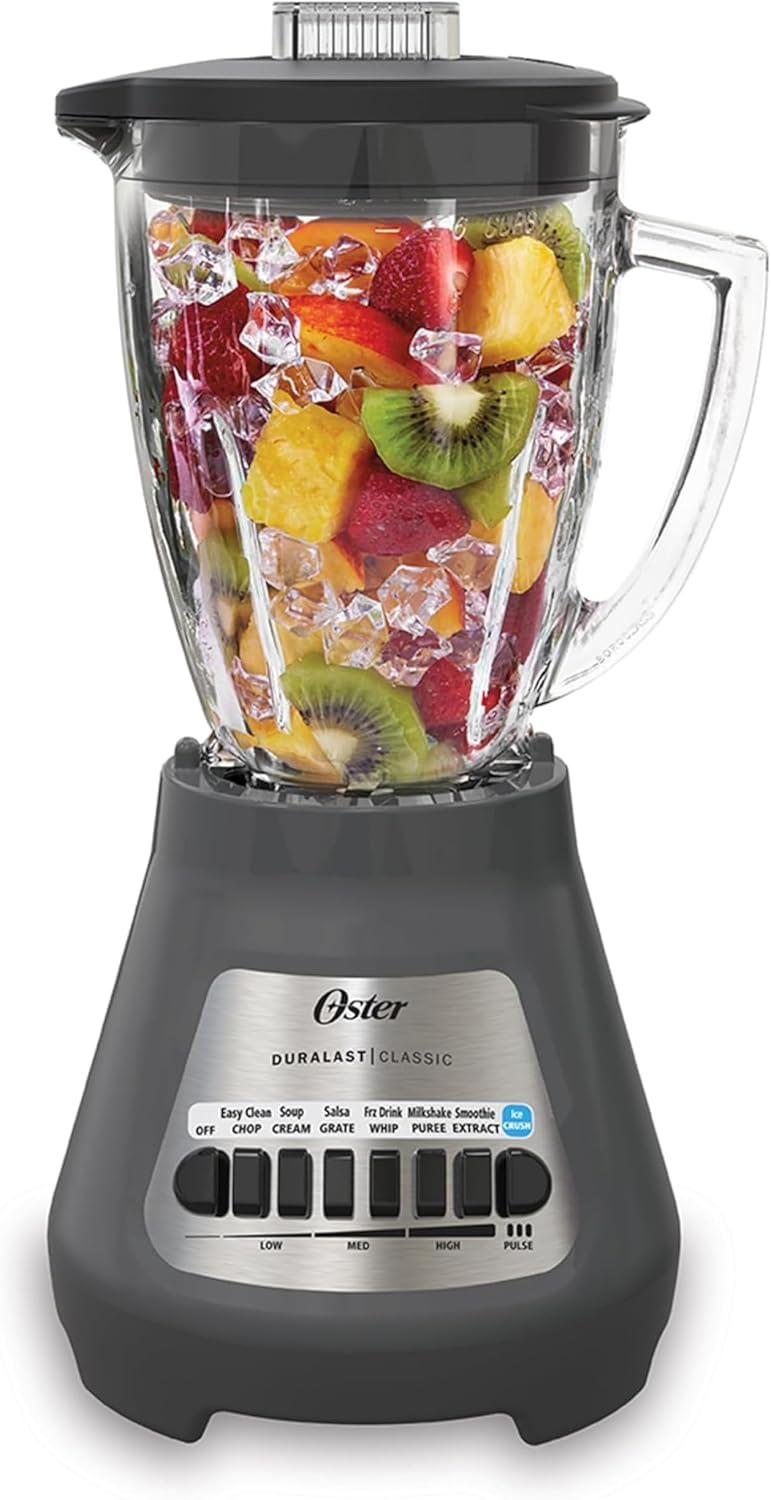 Visit on Amazon → Oster Classic Series 8-Speed Blender |
Everyday blends on a budget | 6-cup glass jar | 8 speeds, glass resists stains and cracks at the seal |
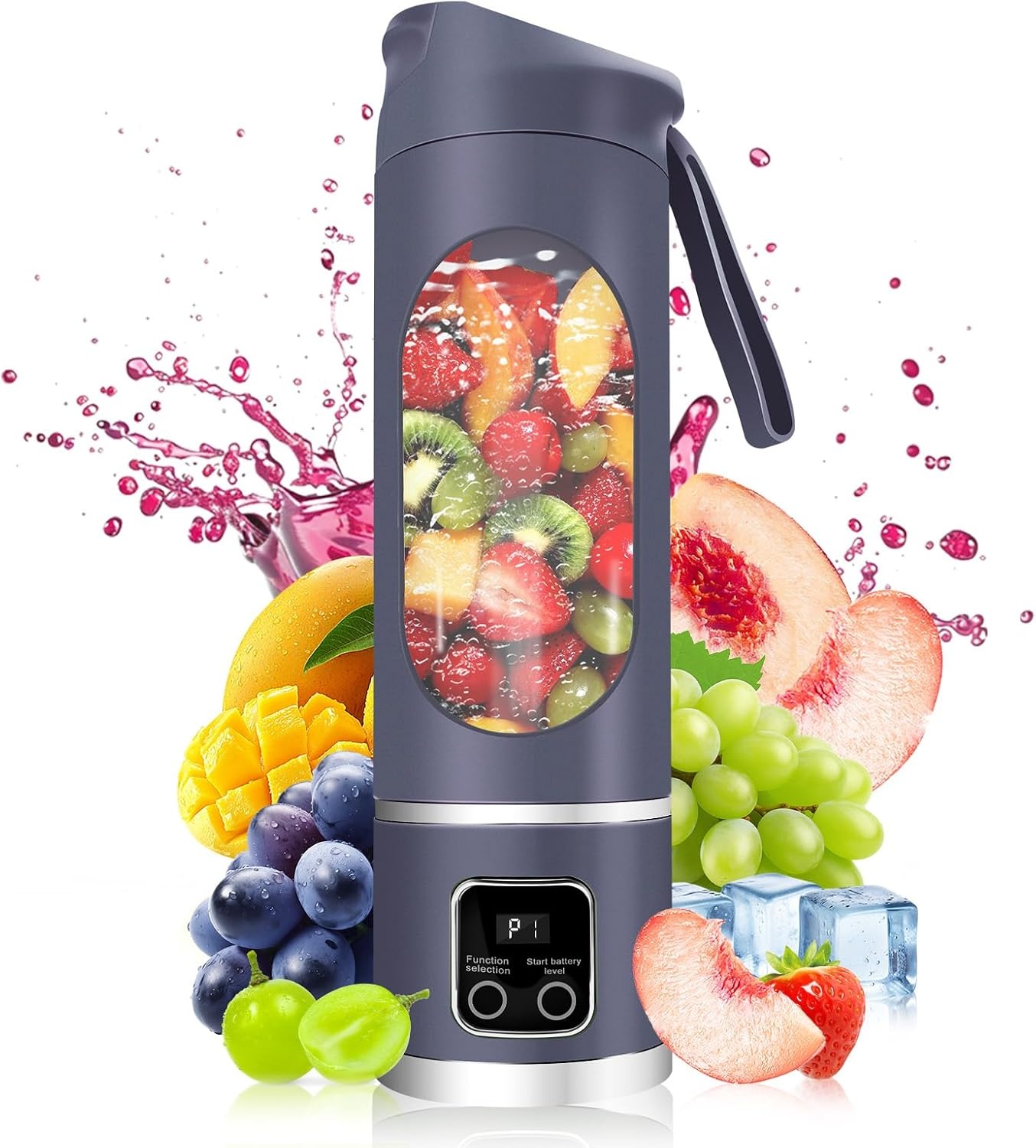 Visit on Amazon → Personal Blender 500ml, USB-C |
Travel, desk, dorm, one smoothie | 500 ml cup | Rechargeable over USB-C, cordless, verify the ice claim yourself |
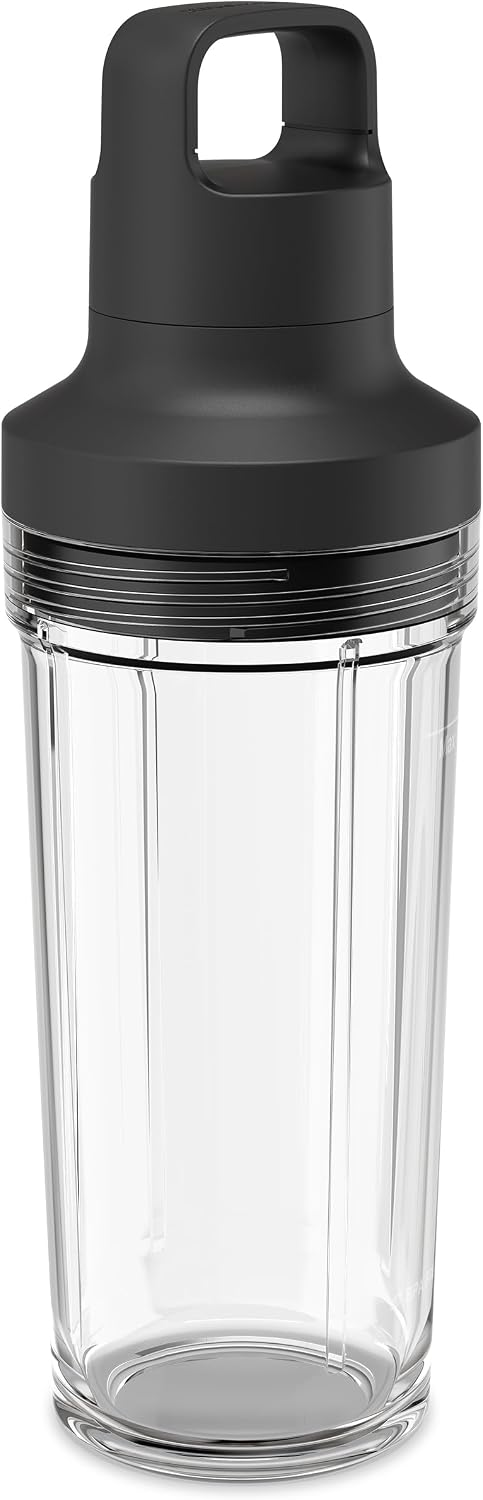 Visit on Amazon → KitchenAid Go Personal Blender Jar Accessory |
Spare or second jar | 16 oz jar only | Accessory, not a blender, motor base not included |
How I judge a blender
Every machine that comes through my kitchen runs the same gauntlet, and it is the gauntlet from my shop days. Fifty smoothies, back to back. Frozen mango, kale stems, and almond butter, because those three expose every weakness a blender has. Then the snow cone test, which is a single ice cube and a hard look at what comes out. Then a three-minute frozen fruit stress run, because that is roughly the length of a busy shift drink and it is long enough to make a weak motor complain out loud.
You can run a version of this yourself inside a return window, and I would encourage it. Start with the ice. Ice is the cheapest, fastest, most honest test in the kitchen, and it does not care what the box says. Then do a thick blend and watch whether the mixture circulates on its own or just spins in a hole above the blades. Then check whether the base stays put.
The dishwasher question comes last, and it is the one that decides whether you will still be using the machine in a year. If the jar and the lid can go in the rack, you will keep blending. If they need hand washing, you will not, no matter how good your intentions are.
What actually matters: jar geometry, glass, and cups
Watts are a starting point, not a verdict. Two machines with the same number on the box can behave nothing alike, because the jar shape decides whether food gets pulled into the blade path or pushed away from it. A wide, straight pitcher with a taper at the bottom will pull a thick blend down. A jar that is too wide at the base will let a vortex form and leave you scraping the sides with a spatula while the motor screams at nothing.
That is also why a tamper matters on thick blends. It is not an accessory, it is the difference between a smoothie and a chunky mess, and it is the first thing missing from cheap units. If you are blending nut butter or a dense frozen mix, plan on stopping to scrape. That is normal. A machine that refuses to accept a scrape is the problem.
Jar material is the durability question, and glass wins it. Plastic jars fail at the base seal, and that failure is the one you cannot fix. Glass also handles heat better if you make soup, and it does not hold onto odors. The tradeoff is weight, and weight is a fair price for a jar that outlives the motor.
Finally, single-serve cups. I make fun of them, and I own three, and I will keep owning them, because a cup blender is what you use on a rushed morning. Just know what you are buying. A cup is a convenience, not a blender system, and no cup-based machine is going to replace a pitcher for batch work. The best setup is one pitcher for volume and one cup for speed, which is exactly why the combo machine at the top of this list is the one I keep pointing people toward.
Should you buy the nutribullet SmartSense Blender Combo?
Yes, for most households. It covers the pitcher job and the cup job in one purchase, the 1,400-watt motor has real headroom for frozen fruit, and the 5-speed control lets you start slow instead of slamming a thick blend at full power. If you make smoothies most days and occasionally make soup or nut milk, this is the machine that ends the search. Check current Amazon price and compare it against buying a pitcher blender and a cup blender separately, because that is the real comparison.
Should you buy the Oster Classic Series 8-Speed Blender?
Yes, if your blends are soft and your budget is tight. The 6-cup glass jar is the reason to pick this one over the plastic competition at the same level: it cleans up in the dishwasher, it resists stains, and it will not crack at the base seal. Expect to help it along with frozen fruit and nut butter. In exchange you get a machine that is simple, repairable in spirit, and genuinely hard to kill.
Should you buy the USB-C personal blender?
Buy it for travel, a desk, or a dorm, and buy it knowing the 500 ml cup is one serving. It is the right answer when there is no outlet or no counter, and it is the wrong answer for daily frozen smoothies at home. Test the ice claim on day one with a single cube and adjust what you load into it based on what you see.
Should you buy the KitchenAid Go jar accessory?
Only if you already own the KitchenAid Go system and you want a second 16-ounce jar in Black Matte so a clean cup is always available. It is a spare part, not a starter kit, and it is not a substitute for a blender with a motor. If you are starting from zero, put your money into a full machine first and add jars later.