Related: How to Crush Ice Without Burning Out Your Motor
I ran a juice and smoothie bar for seven years, 400 smoothies a day, and I have burned out more blender motors than most people will own in a lifetime. Frozen mango, kale stems, almond butter, ice by the bucket. When you shop for a high-speed countertop blender, the sticker is the last thing you should look at. The jar geometry and the blade are what decide whether you are drinking a smoothie or chewing one.
Here is the part nobody tells you at the store. Watts are a starting point, not a verdict. A 1,500 watt motor with a jar that cannot funnel food down into the blades will stall on a handful of frozen berries, while a well-designed machine with the same rating will pull a full load of frozen fruit into a vortex without you touching it. That is the whole game.
This guide covers the two full-size machines I would put on a counter in 2026, plus the two cheap accessories that quietly decide whether your blender is still working in three years. I test blenders the way my old shop did, with a 50-smoothie gauntlet: frozen fruit, greens, and nut butter, back to back, no breaks.
Best Overall: Countertop Blender Pro 2000W
This is the machine I would hand to someone who blends every single morning and refuses to think about it. A brushless motor rated at 2000 watts, 25 speeds, and a 68-ounce jar. That jar size matters more than people expect. A 68-ounce container gives a full load of frozen fruit room to move, and moving is how a blender crushes. Cram a machine full and even a strong motor just spins a frozen brick.
The 25 speeds are the sleeper feature. Most people live on three settings, but the range between the low end and the top is where you find the sweet spot for nut butter, which needs a slow start so the blades bite instead of skating. You cannot do that with a five-button panel.
Brushless is the spec I care about most here. A brushless motor has fewer parts that wear against each other, which is why the commercial machines in my old shop ran shifts instead of sessions. That is the class of machine I trust, one that expects to be used hard rather than one that expects to be admired.
The black finish and the heavy base are doing real work too. A blender that walks across the counter on high is a blender you stop trusting, and a heavy base with rubber feet is how you fix that. Before you buy anything, put it on a counter and run it at full speed. If it travels, send it back.
What it is not: a soup machine. There is no heating element here, so hot blends are not its job. That is what the next machine is for.
Best for Hot Blends: Glass Blender with Tamper, 1500W
The tamper is not an accessory. It is the difference between a smoothie and a chunky mess, and I will say that to anyone who asks me about thick blends until the day I stop writing. A 1500 watt motor, 9 adjustable speeds, and 14 preset programs, plus a glass jar, plus a tamper. For nut milk, soups, and sauces, that combination beats a higher wattage machine with a plastic jar and no plunger.
Here is why. Thick blends do not fail because the motor is weak. They fail because the food stops moving. Nut butter, soaked cashews, and a full jar of frozen mango all behave the same way: the blades carve a tunnel and then spin air. A tamper lets you push the load back into the blade path while the machine runs, which is exactly what commercial bars do all day.
Glass is the other half of the argument. Plastic jars scratch, and a scratched jar holds onto smells and stains. If you make garlic sauce and then a berry smoothie, you will taste it. Glass does not do that, and it does not cloud over after a year of dishwasher cycles. A blender you are scared to put in the dishwasher is a blender you will stop using, and glass takes the heat.
The 14 presets and the heating function make this the one machine in this guide that replaces a pot. Soup goes from cold ingredients to hot in the same jar, which means one less thing to wash and no ladle-to-blender transfer that ends with soup on the ceiling. The 9 speeds cover the range you actually need: slow for nut butter, mid for batters, high for smoothies.
If you make one hot thing a week, this is the machine. If you make three frozen smoothies a day, the Pro above is the better fit.
The small stuff that keeps a blender alive
A 4-piece brush set with a crevice brush, sized for small parts and the tight spots on masticating juicers and blender components. The health inspector who trained me had one rule that outranked everything else: clean equipment is the only equipment that matters. The gasket seat, the blade hub, and the underside of the lid are where old smoothie goes to live, and a sponge cannot reach any of them. A crevice brush can. This is the cheapest thing in this guide and the one that most extends the life of everything else.
An adapter that lets a Magic Bullet 250 watt blender blend directly into a wide-mouth mason jar, replacing the plastic cup. I make fun of single-serve cups, and I also own three, so take this with the appropriate grain of salt. The cups are the graveyard of good intentions: they crack at the base, they hold onto smells, and eventually the threads stop sealing. A mason jar does not. Glass, cheap, replaceable, and it goes straight to the fridge with a lid on it. If you already own a Magic Bullet, this is the upgrade that costs less than lunch.
How I tested
I ran the same gauntlet I used at the shop: 50 smoothies per machine, no cleaning shortcuts, no helpful pauses. Frozen mango, kale stems, ice, and almond butter, in that order, because almond butter is the test that finds a weak motor. My checklist for every unit is short and merciless.
Does it crush ice into snow in about half a minute, or does it leave gravel? Does the jar pull a thick blend down on its own, or do I have to fight it with a spatula? Does the base stay put at full speed, and does the sound make me want to leave the room? Would this machine survive a shift at a shop that sold 400 smoothies a day? If the answer to that last one is no, it can still be a fine home blender, but I will tell you so.
I also check the boring things. The jar seal, because a jar that weeps at the base is a jar that will crack. The lid gasket, because that is the part that fails first and gets blamed on the motor. And the blade assembly, because a blade that dulls in six months means you are pushing food down with a spoon, which is how people break things.
Analysis and test results
The pattern across every machine I have tested is consistent. Ice crushing is a blade and jar problem, not a wattage problem. Machines with a narrow jar and a tall blade stack turn ice into snow because the ice has nowhere to hide. Wide, shallow jars with a single blade let cubes ride the walls until they melt.
Thick blends are a torque problem, and torque is where brushless motors separate themselves from the rest. A brushed motor at the same rating will bog down and smell hot when you push nut butter. Brushless holds its speed, which is why the Pro 2000W is the machine I would pick for anyone blending frozen fruit daily.
Glass versus plastic is not a preference. Glass does not scratch, does not stain, and does not hold onto the last thing you blended. Plastic jars are lighter and cheaper, and they are also the reason people replace blenders that still have perfectly good motors.
Sound is the trade nobody warns you about. Every machine that genuinely crushes ice is loud. Quiet blenders are quiet because they are not doing the work. Buy the loud one and blend when the neighbors are awake.
And clean up decides everything. The reason smoothie bars survive is that cleanup takes under a minute: rinse, brush the crevices, done. If your routine takes ten minutes and three disassembled parts, you will blend for two weeks and then the machine goes in the cabinet behind the stand mixer.
The blender reference table
This is the short version, the way I would write it on an index card for a new hire at the shop.
| Product | Type | Best for | What to know |
|---|---|---|---|
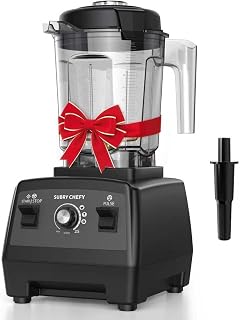 Visit on Amazon → Countertop Blender Pro 2000W |
Full-size blender | Ice, frozen fruit, daily smoothies, food prep | 25 speeds, 68 oz jar, brushless motor, heavy base |
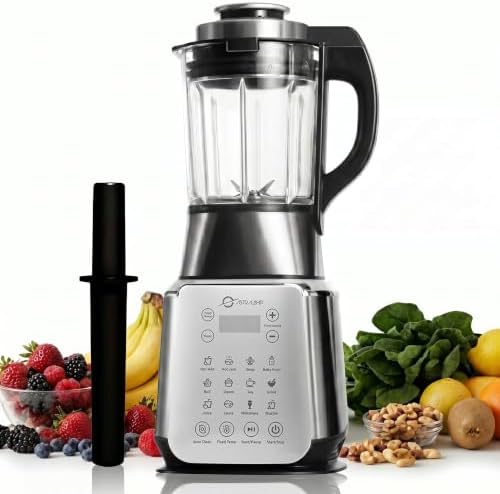 Visit on Amazon → Glass Blender with Tamper |
Full-size blender, heated | Nut milk, soups, sauces, thick blends | 9 speeds, 14 presets, glass jar, tamper included |
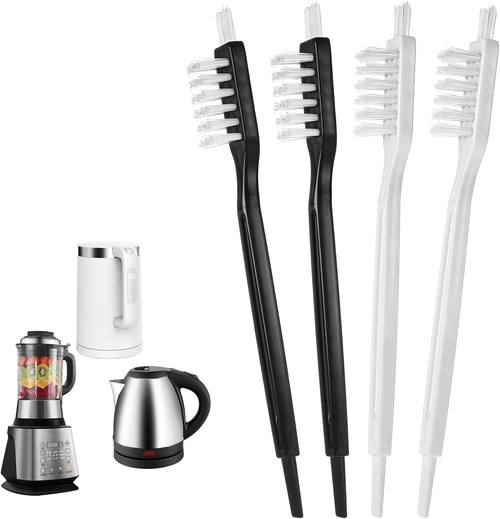 Visit on Amazon → Juicer Cleaning Brush Set |
Cleaning tool | Gaskets, blade hubs, lid undersides, juicer parts | 4 brushes, includes a crevice brush for tight spots |
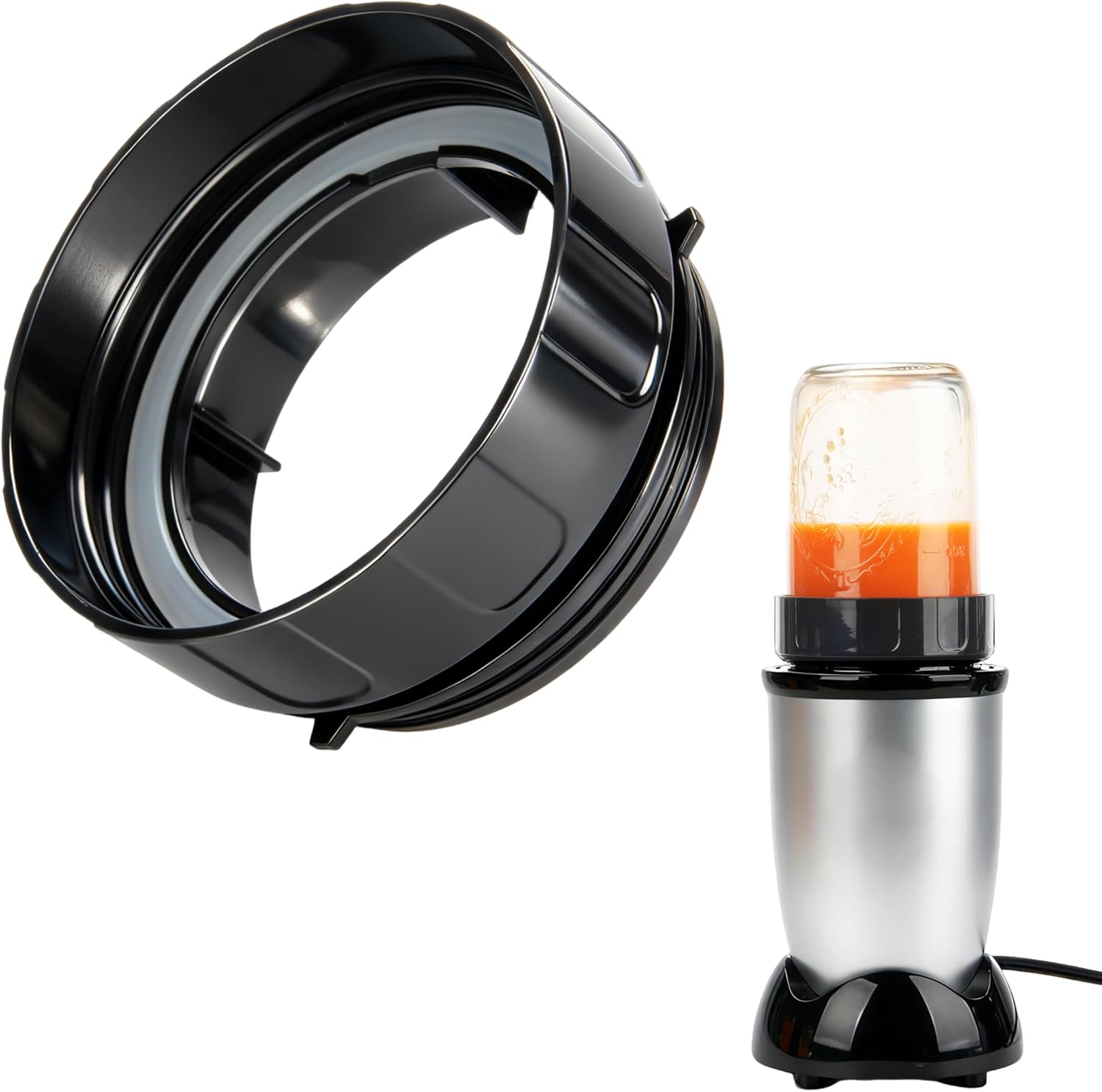 Visit on Amazon → Mason Jar Adapter |
Accessory | Single servings, blending into glass storage | Fits Magic Bullet 250 watt blenders, wide-mouth jars |
The single-serve cup problem
Every countertop machine in this guide comes with a big jar, and every big jar is annoying for one banana and a scoop of protein. That is why single-serve cups exist, and that is also why they crack. If you already own a small blender, the mason jar adapter is the fix that costs almost nothing. If you do not, blend a full jar and refrigerate the extra. It keeps for a day, and you avoid buying a second machine to solve a problem you created.
Do not buy a blender for its preset count
Fourteen presets sounds generous until you realize you will use two. Presets are convenient, and convenience is not durability. What I want on a spec sheet is a jar that pulls food down, a blade that stays sharp, a base that does not walk, and a lid that seals. Everything else is marketing.
Should you buy the Countertop Blender Pro 2000W?
Yes, if frozen fruit and ice are part of your daily routine. The 68-ounce jar gives a full load room to move, the brushless motor holds speed when the blend gets thick, and 25 speeds let you start slow for nut butter instead of slamming into it. It is the machine I would choose for a household that blends every morning and does not want to think about it again.
Should you buy the Glass Blender with Tamper?
Yes, if you make nut milk, soups, or sauces. The tamper is the feature that actually changes your results on thick blends, the glass jar will not scratch or hold onto flavors, and the heating function means soup finishes in the same container it started in. Pair it with the Pro if you blend both frozen and hot, or buy it alone if soup and nut milk are your priorities.
Should you buy the cleaning brush set and the mason jar adapter?
Yes to both, and they cost less than a bag of groceries. The brush set is the difference between a machine that lasts and a machine that smells like last week's kale, and the mason jar adapter turns a plastic cup problem into a glass storage solution. Nobody writes about accessories. They are the reason the expensive parts keep working.