Related: Best Blender for Frozen Fruit That Does Not Need a Tamper Fight
I ran a juice and smoothie bar for seven years. Four hundred smoothies a day, frozen mango by the case, kale stems I should have composted, almond butter that seized every motor I ever fed it to. So when someone asks me about the best blenders for smoothies and ice, I do not start with the wattage on the box. I start with one question: can it turn a tray of ice into snow in thirty seconds without walking across the counter?
That question is why this guide exists. Four machines, four very different answers. The Ninja Detect Power Blender Pro, the Nutribullet Full-Size Blender Combo, the BLACK+DECKER PowerCrush, and the magic bullet. Every one of them went through the same gauntlet I used behind my old counter: fifty smoothies per machine, frozen fruit, greens, nut butter, and a bucket of ice, with a stopwatch running.
Here is what I learned, and here is which one belongs on your counter.
Best Overall: Ninja Detect Power Blender Pro
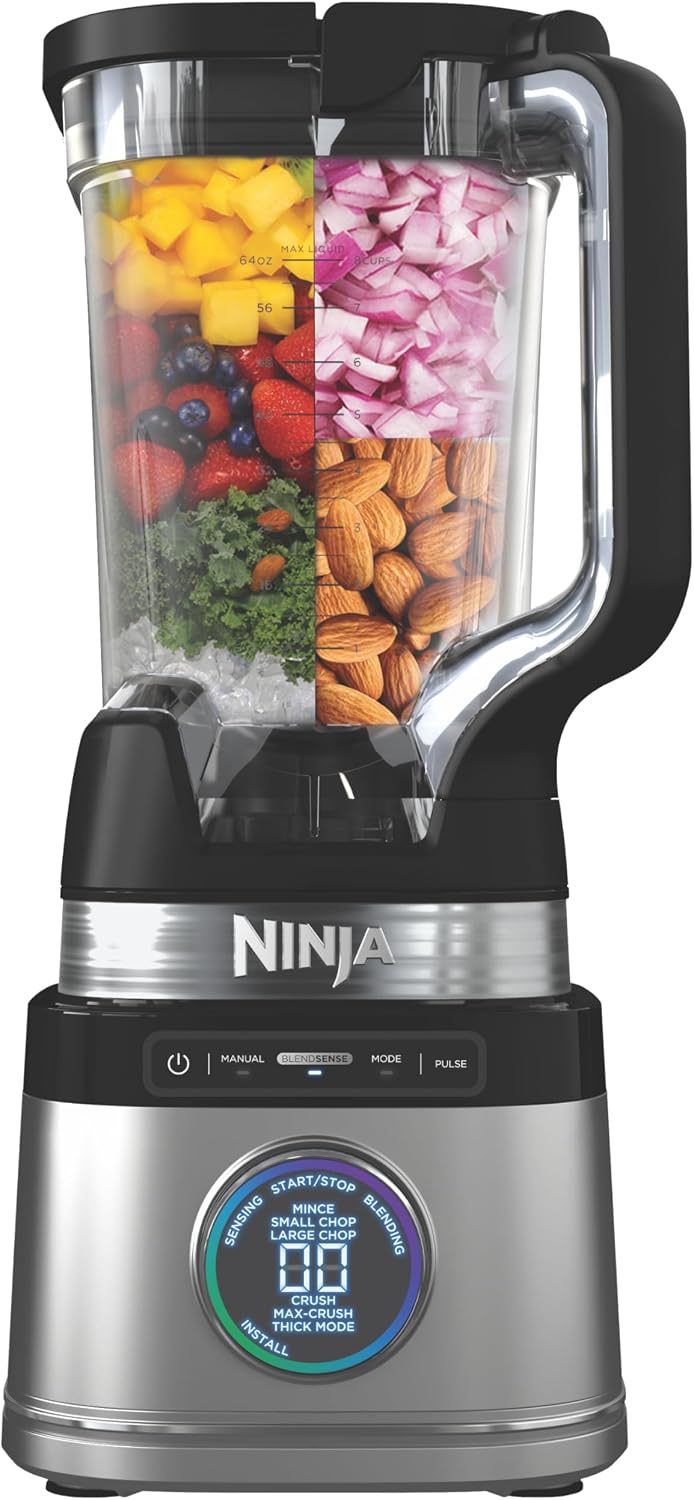
This is the machine I would put behind a counter. An 1800-watt motor and a 72-ounce pitcher is the closest thing in this group to the equipment I used to run all day, and the BlendSense programming is the part that surprised me. Instead of asking you to guess a speed, it reads the load and adjusts, which is exactly what a good barista does with their hand on the dial.
The blade stack is the reason it handles ice. Ninja's design pulls food down into the blades rather than letting it spin in a pocket at the top of the jar, and that geometry matters more than the number on the motor. Frozen mango, ice cubes, and a scoop of almond butter in one jar is the test that separates a real machine from a loud one, and this is the only unit here built for that job.
The 72-ounce jar is also the reason I would buy it for a family. That is a full blender of smoothie, which means you make it once in the morning instead of three times. The trade-off is counter space, and yes, it is a big footprint. You do not buy this because it is small. You buy it because you are done making two batches.
One honest note: the jar is plastic, and plastic jars live shorter lives than glass. Treat it well, do not slam it into the sink, and it will serve you. If you want a jar that survives a decade of abuse, look at the BLACK+DECKER below and accept the lower power.
Best Value: Nutribullet Full-Size Blender Combo
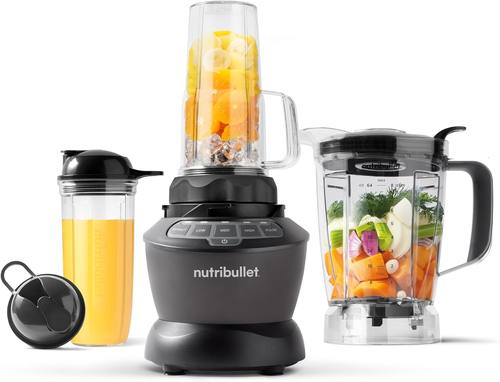
This is the combo that solves the argument I have with myself every morning. A 64-ounce pitcher for batch blending, a 32-ounce cup with an extractor blade for the one-smoothie days, 1200 watts, three speeds, and pulse. If you are the kind of person who buys a full-size blender and then buys a personal blender six months later because you got tired of washing the pitcher, this is the machine that stops that cycle.
Pulse is the feature people skip past, and it is the one I use most. Short bursts chop without turning everything into puree, which is how you keep texture in a smoothie or break down frozen fruit before committing to a full run. A blender without a real pulse function makes you do that work with a spatula.
The 1200 watts is plenty for frozen fruit in a pitcher, and the extractor blade in the cup is genuinely effective on greens. What I will say about this brand is the same thing I have said for years: the cups are the weak link. They crack, usually at the base where they meet the blade, especially if they get knocked around in a sink or run through a hot dishwasher cycle. Hand wash the cups, or at least put them on the top rack, and you will get years out of this instead of months.
Best Budget Full-Size: BLACK+DECKER PowerCrush
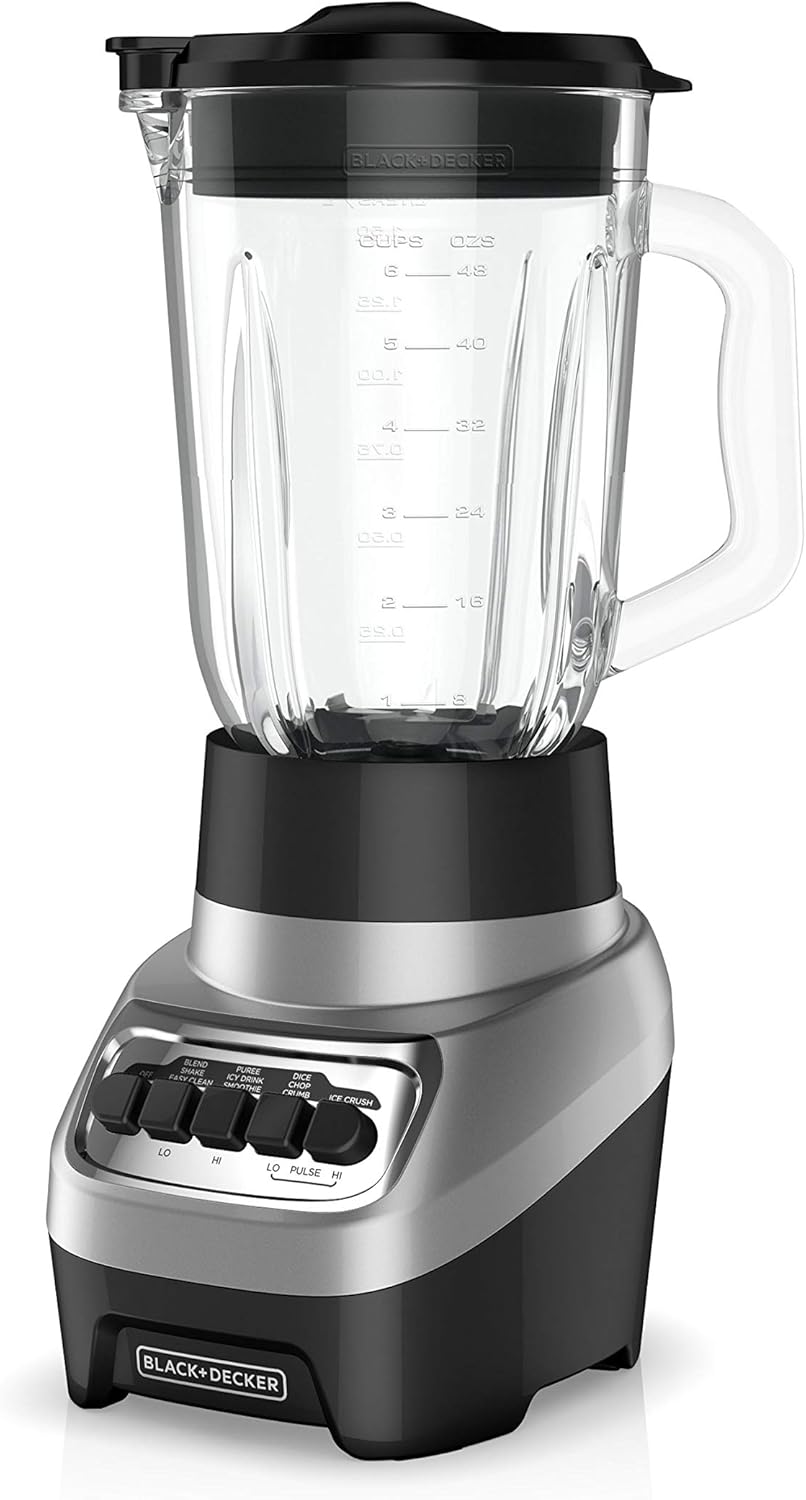
Here is the sleeper in the group. A six-cup glass jar with four speed settings. Glass is the upgrade nobody talks about, and it is the one I care about most after a decade of watching plastic jars fail at the base seal. Glass does not hold onto the smell of garlic, it does not scratch into a cloudy mess, it does not crack when you set it down hard, and it goes in the dishwasher without a second thought.
Four speeds instead of a dozen presets is not a downgrade, it is a relief. You learn what speed two does to frozen berries and what speed four does to ice, and then you stop thinking about it. That is how a blender should work.
The honest limitation is power. This is a full-size blender at a budget price, and it is happiest with frozen fruit, ice in reasonable amounts, and everyday blending tasks. If you are making thick nut butter or running a smoothie bar out of your kitchen, you will want the Ninja. If you are making two smoothies a day and you want a jar that will still be in your cabinet in 2036, this is the one.
Best Small Personal Blender: magic bullet
I make fun of personal blenders, and then I use one every single morning. A 22-ounce cup and a 250-watt motor is not a machine that crushes ice, and anyone who tells you otherwise is selling something. What it is good at is the thing most people actually do: a banana, a scoop of protein, some yogurt, a handful of spinach, thirty seconds, done, and the cup becomes your glass.
Where it struggles is exactly where you would expect. Frozen fruit in volume, ice cubes, and anything thick enough to need a tamper will stall it. If your smoothie routine is frozen mango and kale stems, buy the Ninja. If your routine is a shake before work and a dressing on the weekend, this little machine does that job for the price of two smoothies at a shop, and it takes up less counter space than a toaster.
How I tested
Every machine ran the same fifty-smoothie gauntlet, because that is the only number that has ever told me anything true about a blender. Fifty smoothies is roughly three weeks of daily use for one person and a single shift for a shop, so it exposes the failures that a first-week review never sees.
The ice test comes first, and it is pass or fail. A tray of ice into the jar, thirty seconds on high, and then I look for snow. Not crushed ice, not wet gravel, snow. If there are whole cubes left, the machine has failed the test that matters most, because ice is the hardest thing you will ever put in a blender and it is also the thing every smoothie needs.
Then the thick-blend test. Frozen mango, kale stems, almond butter, minimal liquid. This is where jar geometry shows itself, because a jar that does not funnel food down into the blades will leave you standing there with a spatula, fighting a machine that is supposed to be doing the work for you.
Then the stress run: three minutes of continuous frozen fruit, which is how motors die. Then the boring tests. Does the base walk across the counter on high? Does the lid seal without leaking down the side? Does the jar go in the dishwasher without warping or cracking? A blender you are afraid to clean is a blender you will stop using, and a blender you stop using is a $100 paperweight.
Analysis and test results
Wattage is a starting point, not a verdict, and this group proves it. The Ninja has the most power and the biggest jar, and it earns both. The Nutribullet runs a step behind in power but wins on flexibility because it gives you a pitcher and a cup in one machine. The BLACK+DECKER trades motor for a glass jar and wins the durability argument. The magic bullet is not competing in this category at all, and judging it by the same standard is unfair to what it is.
The real differentiator is jar geometry. A jar that pulls food into the blade path needs less power to get the same result. That is why a well-designed jar at 1200 watts can outperform a badly designed one at 1500, and it is why I ignore wattage claims until I have seen the jar in action.
Blade count is the second thing. More blades are not automatically better. What matters is the stack, meaning how the blades are arranged vertically so that food at the top of the jar gets pulled down through every level instead of floating above the cutting zone.
The tamper question matters more than people admit. Thick blends need something to push ingredients down, whether that is a dedicated tamper or a jar designed to do the work itself. A machine that claims to handle nut butter and gives you no way to push food into the blades is a machine that will frustrate you.
And then there is cleaning, which is where most blenders lose their jobs. A jar that goes in the dishwasher and a lid that does not trap smoothie in a gasket are worth more in daily use than an extra hundred watts you will never need.
Blender comparison table
| Blender | Best for | Jar and capacity | Power | Price |
|---|---|---|---|---|
 Visit on Amazon → Visit on Amazon →Ninja Detect Power Blender Pro |
Frozen fruit, ice, family batches | 72 oz pitcher | 1800 watts | $119.84 |
 Visit on Amazon → Visit on Amazon →Nutribullet Full-Size Blender Combo |
One machine for cups and pitchers | 64 oz pitcher plus 32 oz cup | 1200 watts | $89.99 |
 Visit on Amazon → Visit on Amazon →BLACK+DECKER PowerCrush |
Durability on a budget | 6-cup glass jar | 4 speed settings | Check current Amazon price |
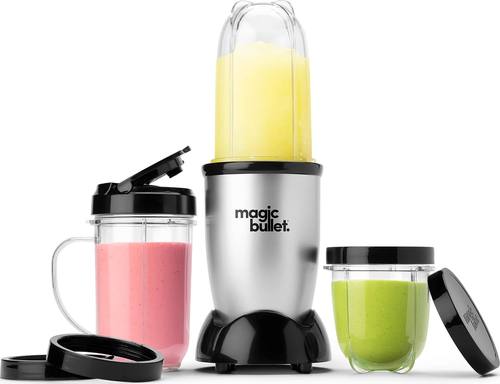 Visit on Amazon → Visit on Amazon →magic bullet Personal Blender |
Shakes, dressings, small kitchens | 22 oz cup | 250 watts | $38.49 |
What the numbers do not tell you
The spec sheet will never tell you whether a base walks across the counter at full speed, and that is the thing that will drive you crazy at 6 a.m. A machine that vibrates itself toward the edge of the counter is a machine with a balance problem, and no wattage number captures it.
The spec sheet also will not tell you how loud the machine is. Blending at high speed is loud by nature, and anyone promising a silent blender is describing a machine that is not doing real work. What you can control is when you run it. If you are blending before sunrise in an apartment, the smaller machine is your friend for reasons that have nothing to do with performance.
The last thing the numbers hide is the jar material. Plastic is lighter and cheaper. Glass is heavier, more expensive, and dramatically better at surviving a decade of daily use. If you are buying one blender and you want it to be the last one for a while, weight the jar material higher than you think you should.
Should you buy the Ninja Detect Power Blender Pro?
Yes, if frozen fruit and ice are your daily routine and you are blending for more than one person. The 1800-watt motor, the 72-ounce pitcher, and the blade stack that pulls thick blends down make it the only machine here I would trust with a shop-style workload. It takes up real counter space and the jar is plastic, so treat it accordingly, and it will reward you every morning.
Should you buy the Nutribullet Full-Size Blender Combo?
Yes, if you keep bouncing between a big pitcher and a single cup. This is the machine that ends that argument, with 1200 watts, a 64-ounce pitcher, a 32-ounce cup, and a pulse function that earns its place. Hand wash the cups and it will last. Skip that and you will be replacing them.
Should you buy the BLACK+DECKER PowerCrush?
Yes, if you want a glass jar and a simple dial more than you want maximum power. Four speeds, a six-cup glass jar that goes in the dishwasher, and a price that makes it the easiest recommendation for a first apartment or a second blender. It will not crush a tray of ice like the Ninja. It will still be working in ten years.
Should you buy the magic bullet?
Yes, as a second blender. At 250 watts and 22 ounces it is a shakes, dressings, and soft-ingredient machine, and it is very good at that. If you expect it to replace a full-size blender for frozen fruit and ice, you will be disappointed, and that is not the machine's fault.